You are here:

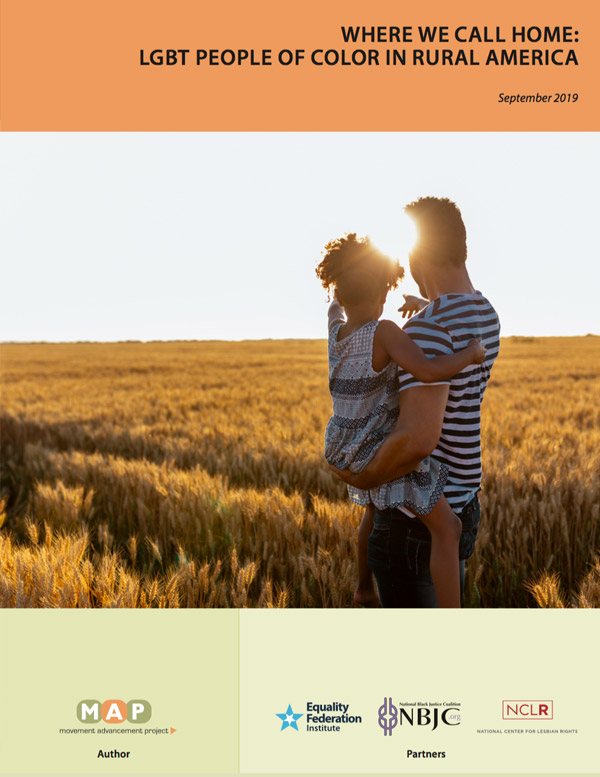
Where We Call Home: LGBT People of Color in Rural America

Authors

Movement Advancement Project

Partners

Equality Federation
National Center for Lesbian Rights
National Black Justice Coalition

Report Resources

Where We Call Home: LGBT People of Color in Rural America: Report
Download
Infographics
Download
Rural LGBT Resources
Download
Rural Community Flyer
Download
Folleto Comunitario Rural (Español)
Download

Recommended Citation

Movement Advancement Project. September 2019. Where We Call Home: LGBT People of Color in Rural America. https://mapresearch.org/report/where-we-call-home-lgbt-people-of-color-in-rural-america/.

Media coverage often portrays rural America as singularly white, conservative and working-class. Yet at least 10 million people of color, including lesbian, gay, bisexual, and transgender (LGBT) people of color, call rural America home. The Movement Advancement Project (MAP) released a new report, Where We Call Home: LGBT People of Color in Rural America, which examines the unique challenges of LGBT people of color in rural America and highlights distinct experiences across different communities of color. As the second publication in the Where We Call Home series, this report details how the structural challenges of rural life amplify acceptance of or discrimination against LGBT people of color.

This report offers extensive new findings on LGBT people of color in rural communities, where discrimination based on race and immigration status is compounded by discrimination based on sexual orientation, gender identity and gender expression. Overall, rural states are significantly less likely than majority urban states to have vital nondiscrimination protections, and are also more likely to have harmful, discriminatory laws. Also, among rural states, those with worse LGBT policy climates also have higher populations of people of color, meaning LGBT people of color are especially at risk of discrimination and especially likely to lack protection against it.

Because LGBT people of color may experience discrimination based on their sexual orientation and/or gender identity and their race or ethnicity, passing nondiscrimination protections at the federal, state, and local level is vital to ensure full participation in all aspects of life. The report concludes with recommendations for community organizations, educators, healthcare providers and policymakers to address the specific needs of LGBT people of color in rural communities.


To access all our resources and research on LGBT people in rural communities, visit our rural topic page.

Related resources

LGBTQ People
LGBTQ people in the United States have families, work hard to earn a living, pay taxes, and serve their communities and their country. MAP offers a collection of resources addressing the many aspects of LGBTQ people’s lives.
Rural
An estimated three million or more LGBTQ people call rural America home. Although LGBTQ people in rural areas face many of the same challenges as their neighbors, they experience different consequences, and the many structural challenges that can often amplify LGBTQ people’s experiences of both acceptance and rejection.
LGBTQ People of Color
It is estimated that one-third of LGBTQ people nationally are people of color. These resources are dedicated to addressing the unique experiences of LGBTQ people of color including reports about the criminal justice system, economic security, workplace issues, and more.
Regional
The lives and experiences of LGBTQ people across the United States varies based on where they live. These resources highlight regional differences for LGBTQ progress across the United States and U.S. territories.
Economic Security
Research consistently finds that LGBTQ people and their families are more likely to struggle economically and experience higher rates of poverty and food insecurity. These resources examine the discrimination LGBTQ people continue to face in many aspects of daily life and how they all contribute to this economic insecurity.
The Power of Affirming Community: How Local Spaces Support LGBTQ Youth Outcomes
Despite the Attacks Against Us, LGBTQ+ People Know How to Win
From defeating harmful legislation, to regional, grassroots efforts, to local community centers, there are many ways that LGBTQ people continue to win.
Retirement Rankings Say ‘Head South.’ But What About LGBTQ People?
Dismantling DEI: A Coordinated Attack on American Values
This report breaks down the strategies opponents have used to target DEI within government, education, and the private sector, and demonstrates the harmful impacts these attacks have on our communities.

Join our community

Get research updates, stories, and ways to support.