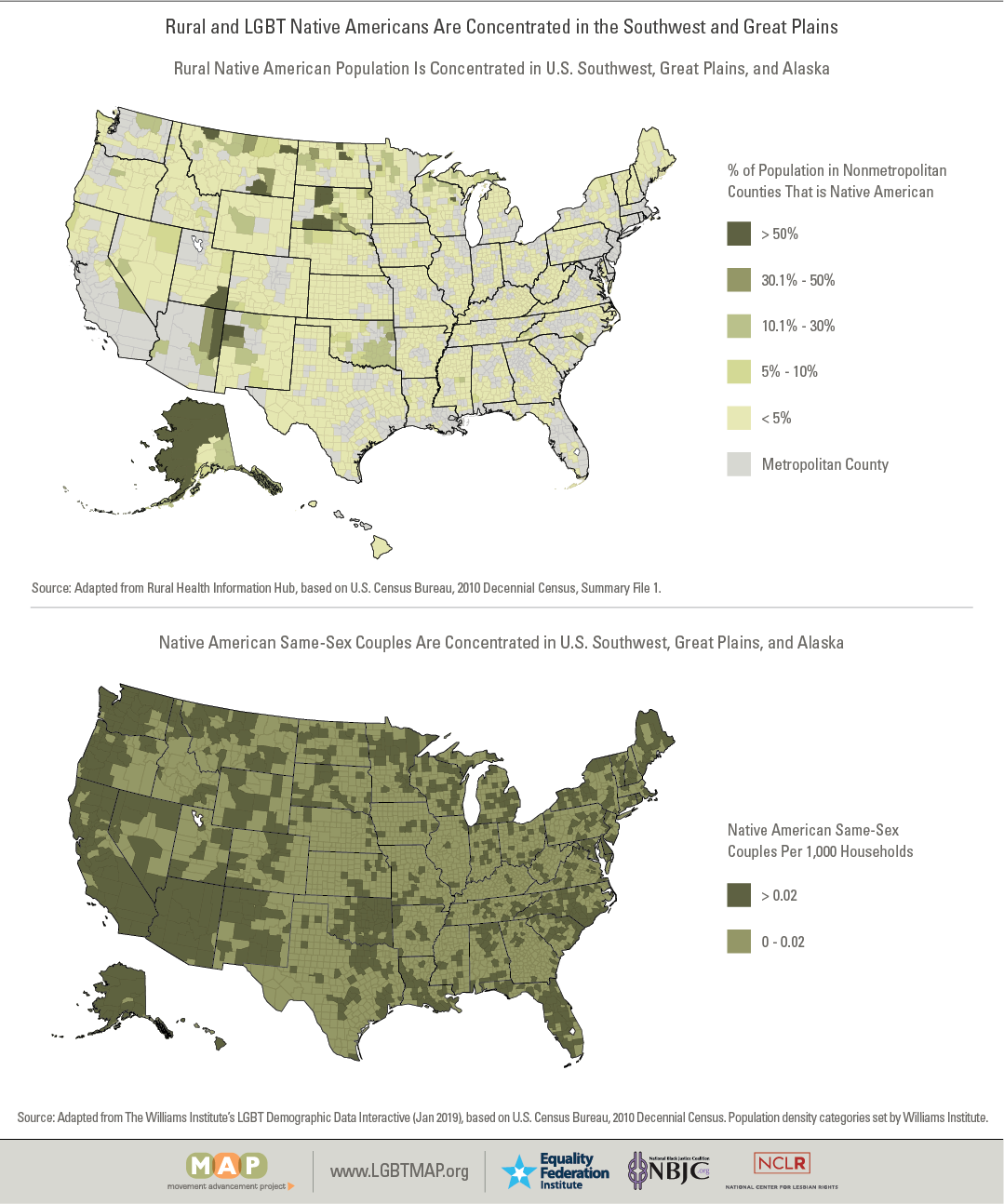
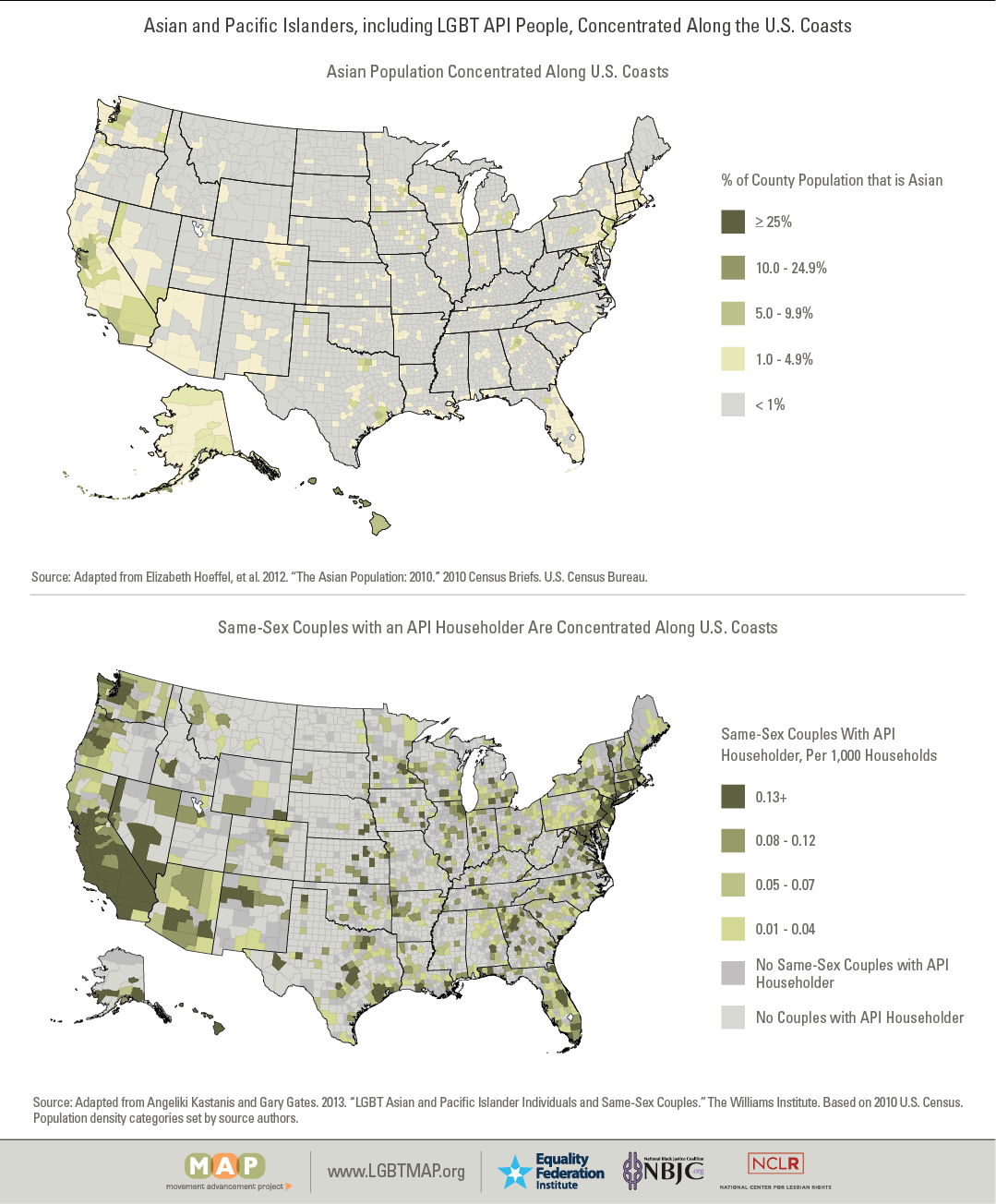
Infographics from report focused on LGBT people of color in rural communities.
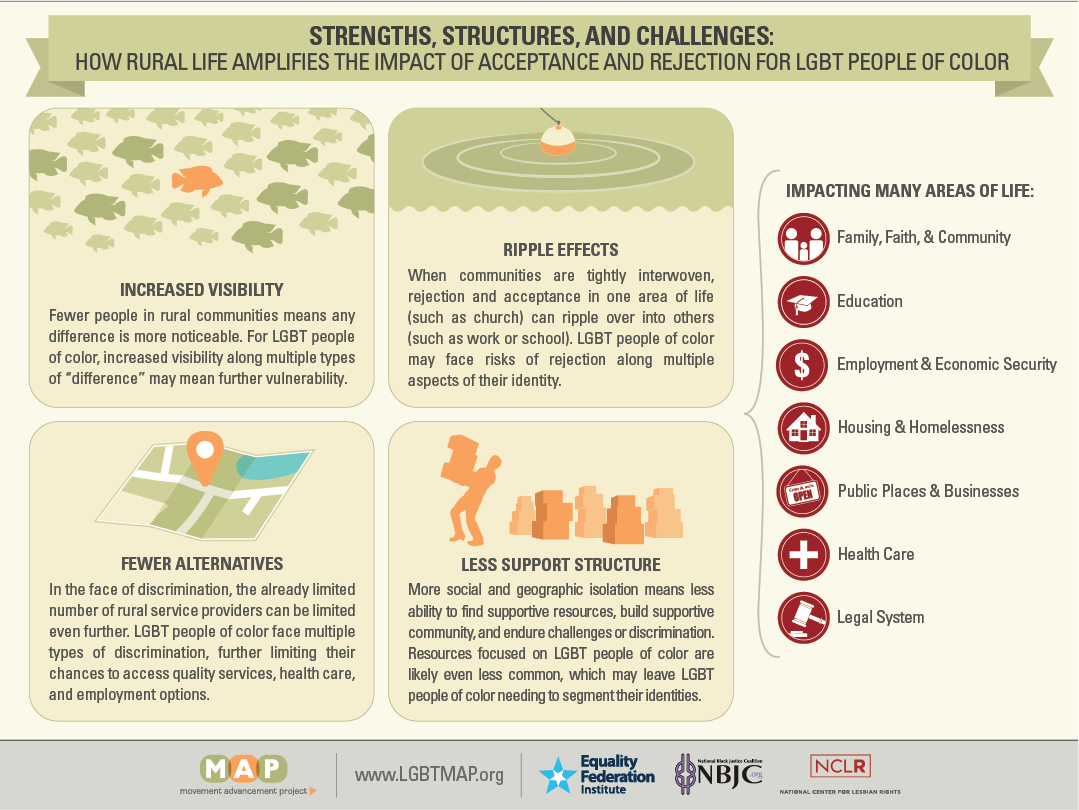


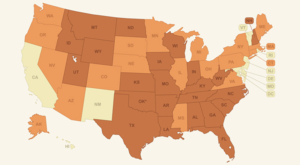

Popular culture images of LGBTQ people suggest that most LGBTQ people live in cities or on the coasts. Yet an estimated three million or more LGBTQ people call rural America home. LGBTQ people are part of the fabric of rural and urban communities alike, working as teachers and ministers, small
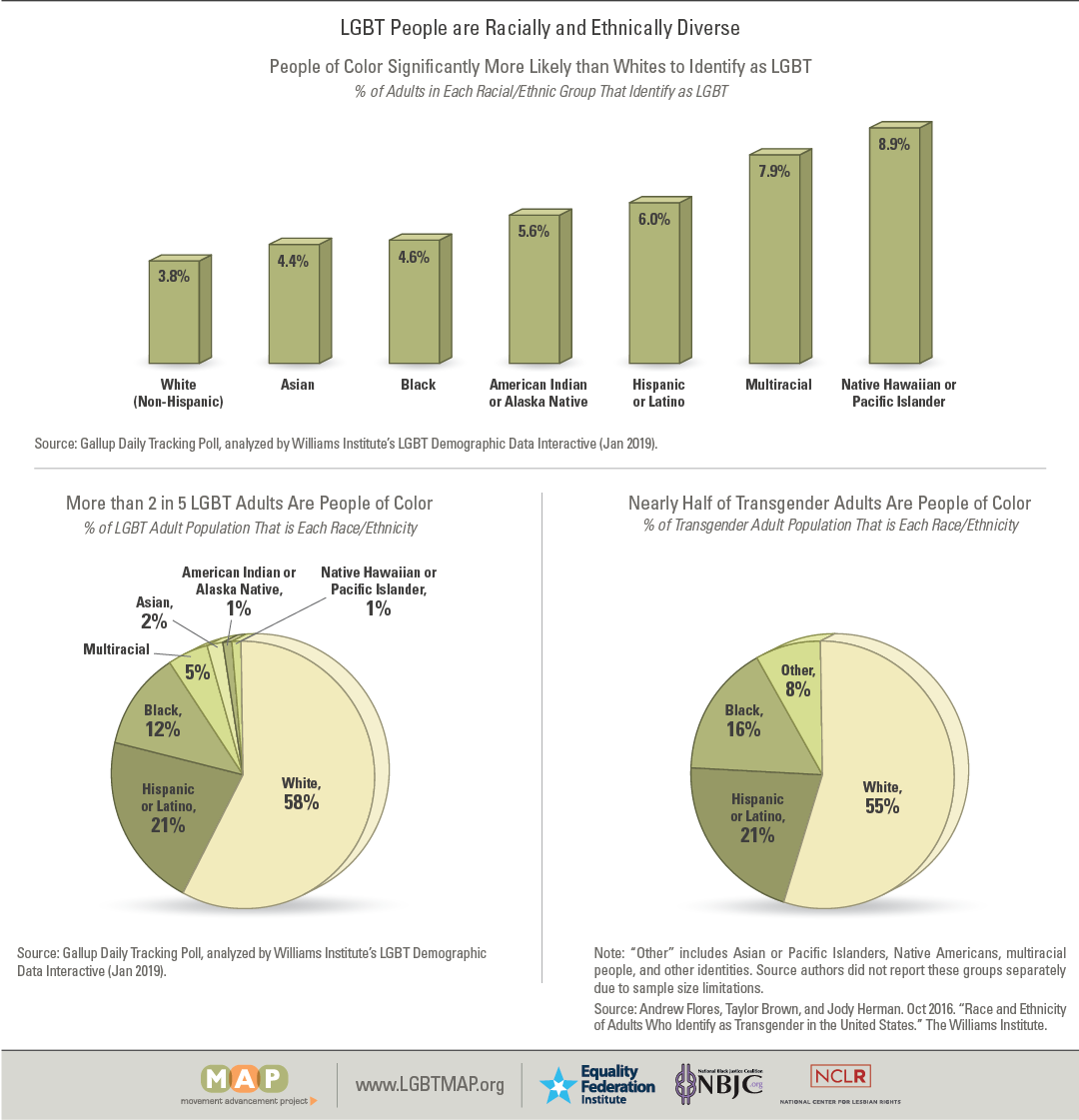
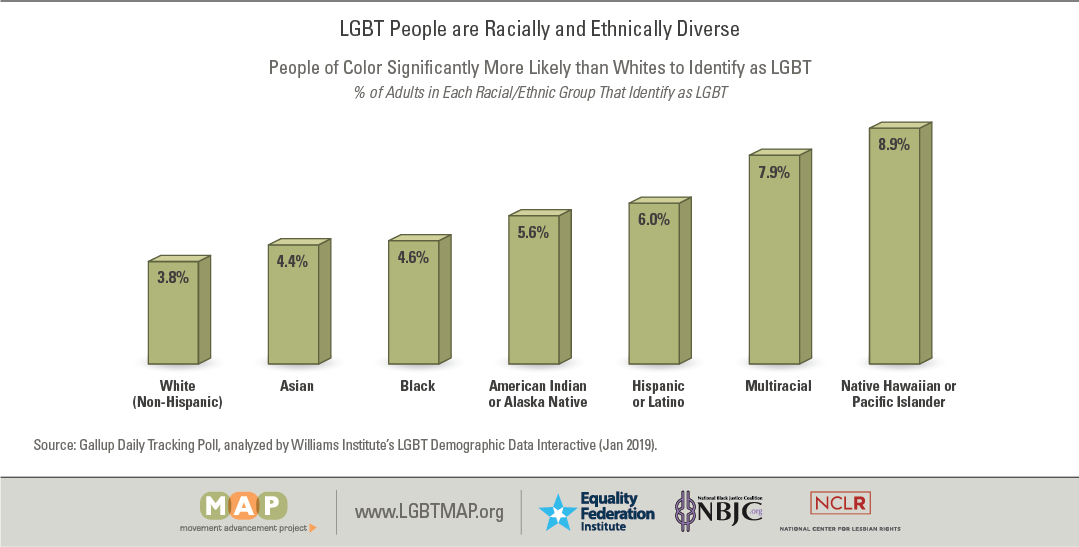
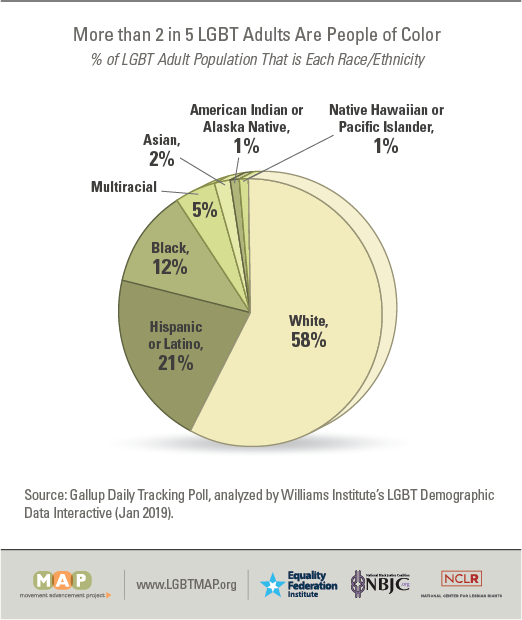
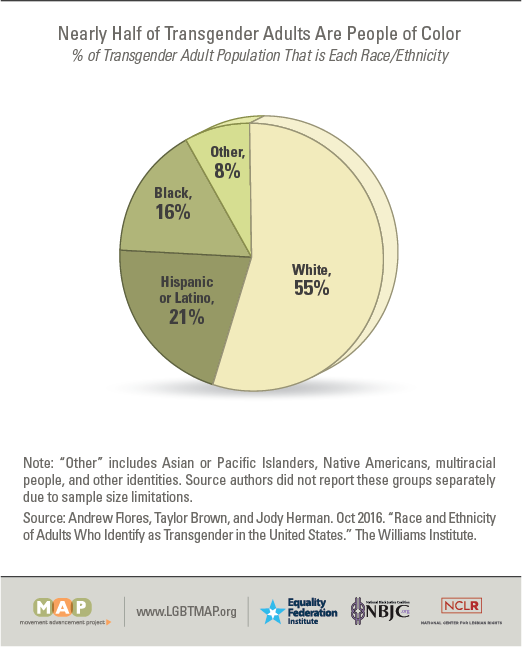
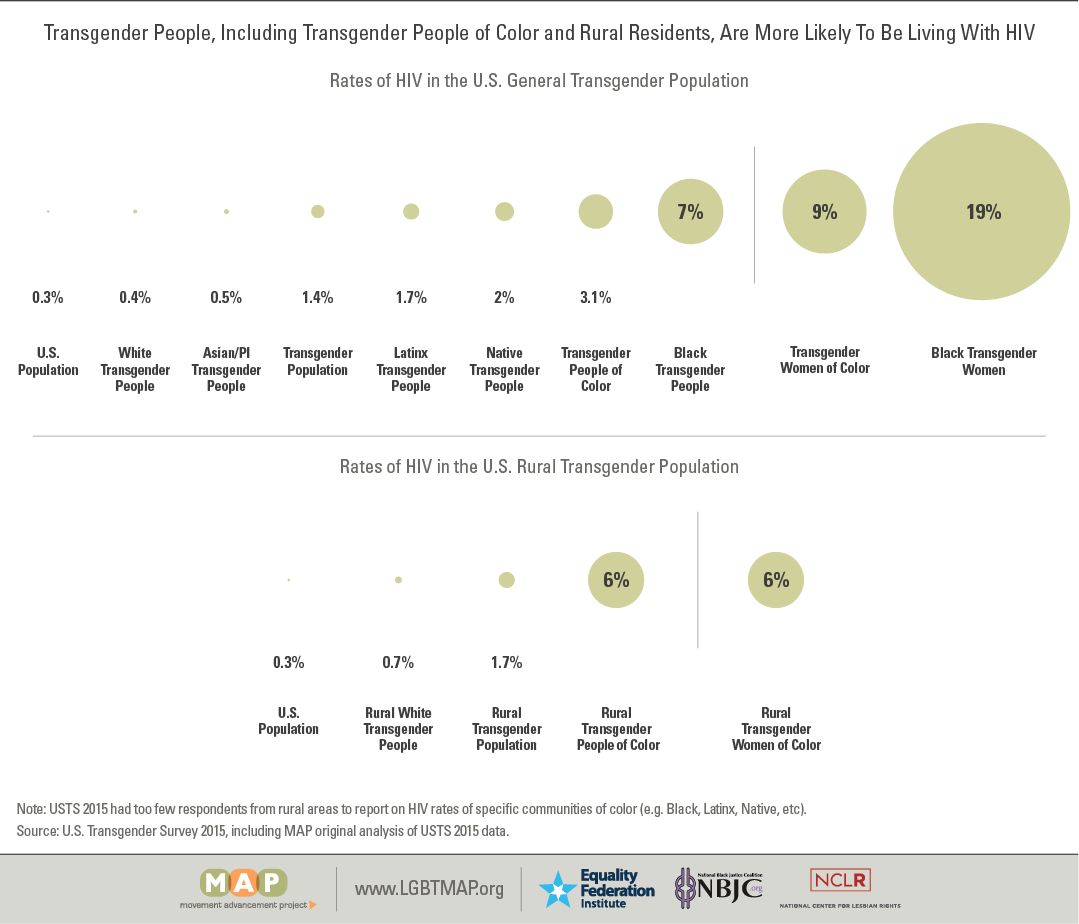
People of color in the United States are more likely to identify as LGBTQ than white people. It is estimated that one-third of LGBTQ people nationally are people of color. LGBTQ people of color have unique experiences both as LGBTQ people and as people of color. Research finds that they
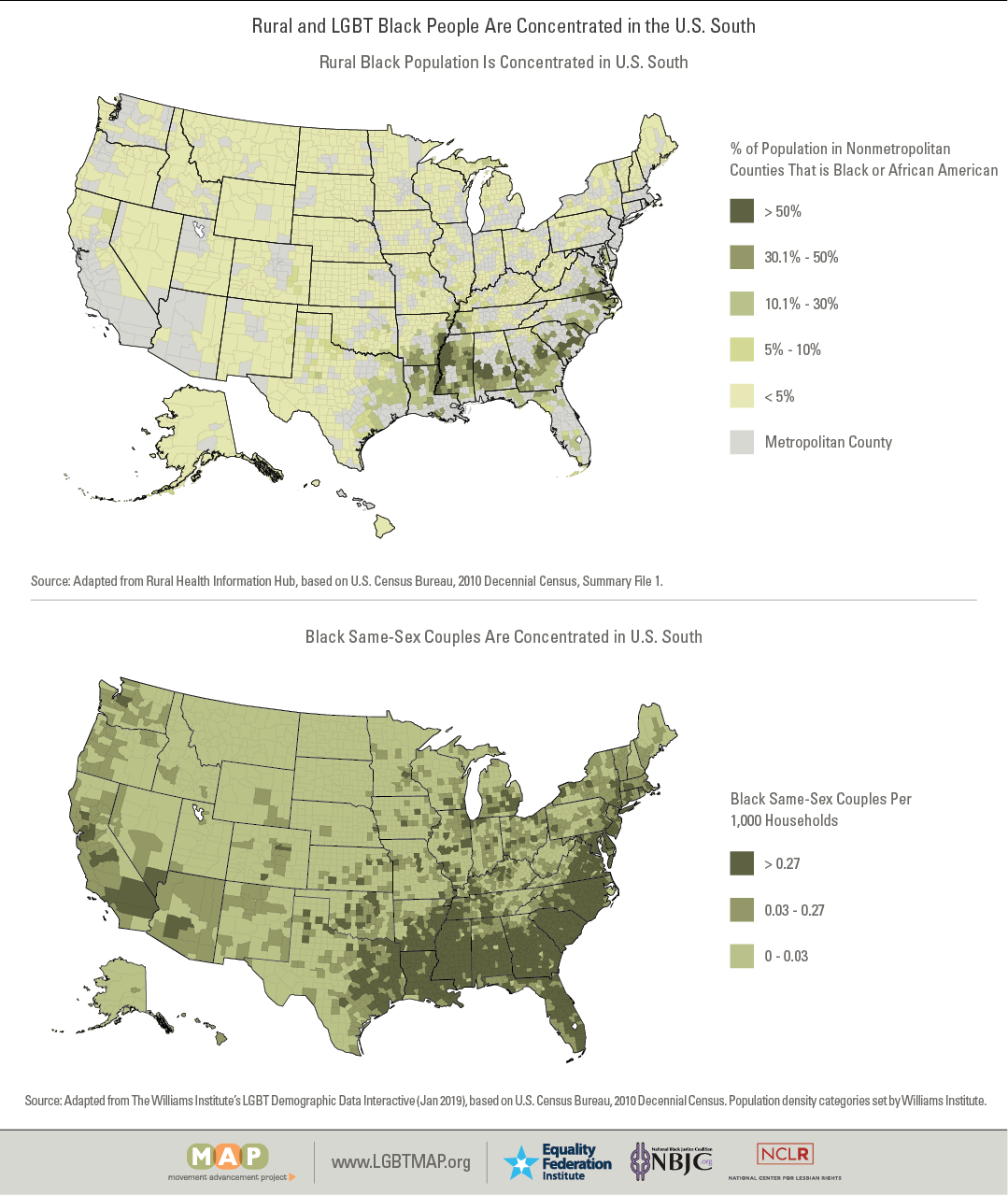
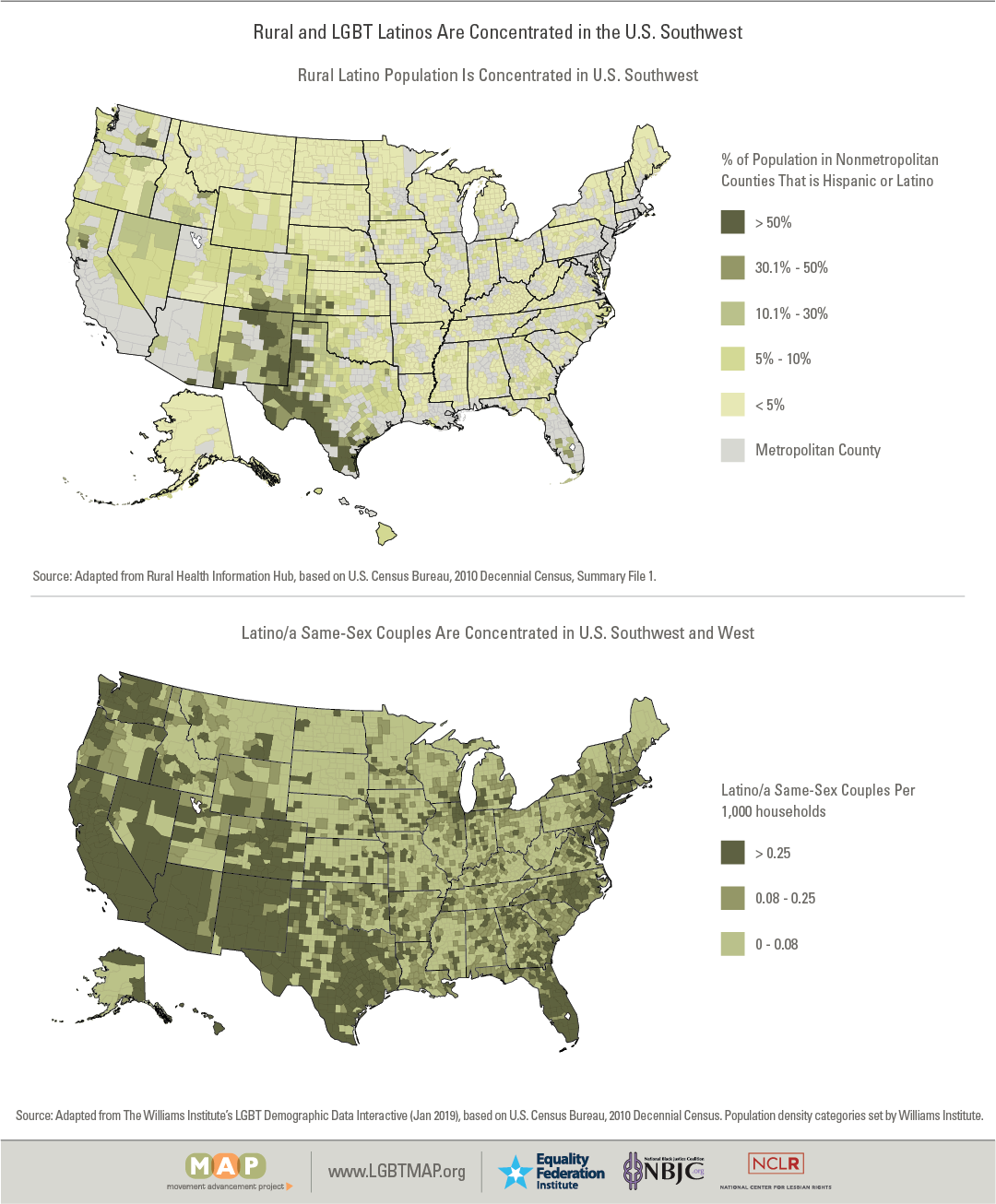
The lives and experiences of LGBTQ people across the United States varies based on where they live. For example, legal and legislative progress on issues affecting LGBTQ people has not advanced equally across the United States. There are variations from state to state and region to region. Positive policy innovations
LGBTQ people in the United States have the same worries as others when it comes to finding good jobs, providing for their families, and saving for the future. But research consistently finds that LGBTQ people and their families are more likely to struggle economically and experience higher rates of poverty
Click the input box or button below to copy the URL
Click the input box or button below to copy the iframe code:
