You are here:

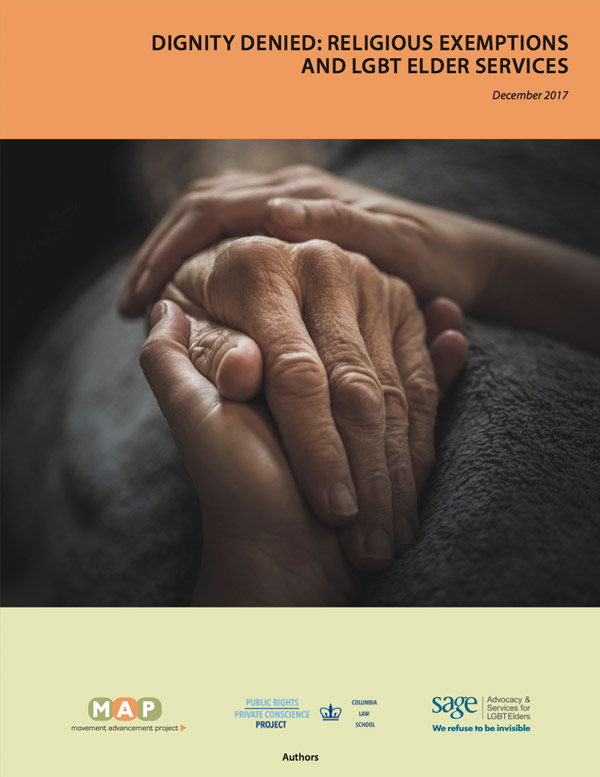
Dignity Denied: Religious Exemptions and LGBT Elder Services

Authors

Movement Advancement Project
SAGE
Public Rights/Private Conscience Project at the Center for Gender and Sexuality Law at Columbia Law School

Report Resources

Dignity Denied: Religious Exemptions and LGBT Elder Services
Download

Recommended Citation

Movement Advancement Project, SAGE, and Public Rights/Private Conscience Project at Columbia Law School. December 2017. Dignity Denied: Religious Exemptions and LGBT Elder Services. https://mapresearch.org/report/dignity-denied-religious-exemptions-and-lgbt-elder-services/.

The Bottom Line

It is estimated that there are approximately 2.7 million LGBT adults aged 50 and older in the United States, 1.1 million of whom are 65 and older. LGBT older adults, like many older Americans in the United States, rely on a network of service providers as they age–for community programming and congregate meals, for health care, and for housing ranging from independent living to skilled nursing. Research finds that a majority of these services are offered by religiously affiliated organizations.  While many of these religiously affiliated facilities provide quality care for millions of older adults, there is a coordinated effort to pass religious exemption laws, issue executive orders and agency guidance, and to litigate court cases to allow individuals, businesses, and even government contractors and grantees to use religion to discriminate. These laws are particularly worrisome for LGBT elders. Religious exemption laws jeopardize the security and safety of LGBT older adults at a time when they are most vulnerable and most in need.
Related resources

Nondiscrimination Laws
Non-discrimination laws protect LGBTQ people from employment, housing, public accommodations, credit, and other discrimination.
LGBTQ Older Adults

Although largely invisible until very recently, LGBTQ older adults make up a significant (and growing) share of both the overall LGBTQ population and the larger 65+ population. While confronted with the same challenges that face all people as they age, LGBTQ elders also face an array of unique barriers and

LGBTQ People
LGBTQ people in the United States have families, work hard to earn a living, pay taxes, and serve their communities and their country. MAP offers a collection of resources addressing the many aspects of LGBTQ people’s lives.
Retirement Rankings Say ‘Head South.’ But What About LGBTQ People?
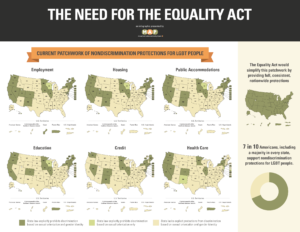
The Need for the Equality Act

This infographics presents the current patchwork of nondiscrimination protections for LGBT people that exists in housing, public accommodations, education, credit, and health care.

Why LGBT Elders Need the Equality Act

July 2021 – This issue brief details how LGBT older people would benefit from passage of the Equality Act, which would update federal civil rights law to explicitly protect people from discrimination on the basis of sexual orientation or gender

Uplift LGBT Carework in the American Jobs Plan

May 2021 – The American Jobs Plan creates a unique opportunity to provide vital services and protections for LGBT older people–two populations that too often feel invisible. This info sheet discusses how we can best support LGBT elders through the

What You Need to Know About the Equality Act
This post discusses why the Equality Act is vital legislation not just for LGBTQ people, but also for women, people of color, and immigrants.
Why We All Need the Equality Act Now

In 2021, Congress has the opportunity to recommit our country and our elected officials in securing fairness and equality for all by passing the Equality Act. Why We All Need the Equality Act Now outlines the ways in which the Equality Act is vital legislation not just for LGBTQ people,

Join our community

Get research updates, stories, and ways to support.