May 2021 – The American Jobs Plan creates a unique opportunity to provide vital services and protections for LGBT older people–two populations that too often feel invisible. This info sheet discusses how we can best support LGBT elders through the Americans Jobs Plan.
Skip to PDF contentUplift LGBT Carework in the American Jobs Plan
Related resources
LGBTQ People
LGBTQ people in the United States have families, work hard to earn a living, pay taxes, and serve their communities and their country. MAP offers a collection of resources addressing the many aspects of LGBTQ people’s lives.
LGBTQ Older Adults
Although largely invisible until very recently, LGBTQ older adults make up a significant (and growing) share of both the overall LGBTQ population and the larger 65+ population. While confronted with the same challenges that face all people as they age, LGBTQ elders also face an array of unique barriers and

Why LGBT Elders Need the Equality Act
July 2021 – This issue brief details how LGBT older people would benefit from passage of the Equality Act, which would update federal civil rights law to explicitly protect people from discrimination on the basis of sexual orientation or gender

Education and Action During COVID-19: Caring for LGBT Older People
Older adults in the United States are at increased risk for contracting COVID-19
LGBT Older People & COVID-19
May 2020 – Older adults in the United States are at increased risk for contracting COVID-19. They are particularly vulnerable without access during the pandemic to the health care resources and social structures that contribute to overall wellness. This is
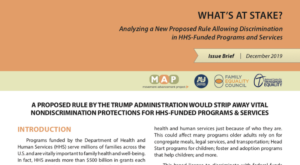
What’s at Stake? Analyzing a 2019 HHS Proposed Rule Allowing Discrimination
December 2019 This brief analyzes a new proposed rule allowing discrimination in HHS-funded programs and services.
Dignity Denied: Religious Exemptions and LGBT Elder Services
The Bottom Line It is estimated that there are approximately 2.7 million LGBT adults aged 50 and older in the United States, 1.1 million of whom are 65 and older. LGBT older adults, like many older Americans in the United States, rely on a network of service providers as they

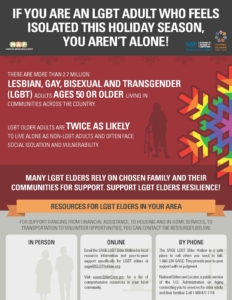
LGBT Older Adults and Social Isolation
For many LGBT older adults, the holidays are a time of social isolation and vulnerability. LGBT older adults are less likely to be married or partnered, and are twice as likely to live alone, leaving them particularly vulnerable to social isolation. This infographic provides resources for LGBT elders as well
No related resources found