You are here:

Health Care

LGBTQ people face several barriers to health and wellbeing, including difficulties accessing health insurance, stigma and discrimination, and lack of access to competent and welcoming health care providers. LGBTQ people have lower rates of insurance; they are more likely to delay medical care; and they report high levels of discrimination by health care providers. Furthermore, LGBTQ people—particularly gay and bisexual men, transgender women, and LGBTQ people of color—are disproportionately impacted by HIV. 

Transgender people may struggle to find competent care providers and blanket denials of coverage by insurance companies, despite federal laws and laws in many states prohibiting such discrimination. Recent efforts to permit health care providers to refuse care to LGBTQ patients threatens their ability to access the care they need. These experiences have a cumulative effect: research finds that LGBTQ people have lower overall health as a result of these barriers.  
Related Resources

Healthcare Laws and Policies
In Their Own Words: Learning from LGBTQ Youth Experiences to Tell a New Story
By combining new insights on who LGBTQ youth are and examining how social dynamics and public policy shape their lives, this comprehensive report expands our understanding of an often overlooked but frequently debated community.
Cutting Through the Noise: An Overview of the President’s First 100 Days

The bottom line is that this administration has moved quickly to dismantle and disrupt the hard work over decades to protect LGBTQ people from discrimination, to provide safe and supportive environments for LGBTQ youth, and to ensure that transgender people can live their lives with safety and joy.  

Freedom Under Fire: The Far Right’s Battle to Control America
Across virtually every aspect of life, people’s freedoms are under assault in the United States. This report connects the dots on how these extremist politicans' attempts aim to fundamentally remake this country.
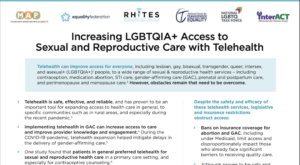
Fact Sheet: Increasing LGBTQIA+ Access to Sexual and Reproductive Care with Telehealth

Despite the safety and efficacy of telehealth services, legislative and insurance restrictions can obstruct access to care.

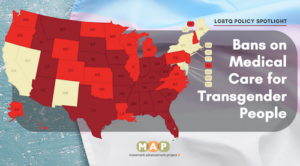
LGBTQ Policy Spotlight: Bans on Medical Care for Transgender People
In this report, MAP analyzed more than 250 bills introduced in recent years that attack access to medical care for transgender people. The report's findings detail the extent of how recent bills targeting medically necessary care for transgender people are expanding and becoming more extreme.
In the Worst Legislative Session Ever, Trans People Will Still Win
Get the Facts: Best Practice Medical Care For Trans Youth

The recent wave of bans attempting to block best-practice medical care for transgender youth has been fertile political ground in an election year.    

The Delta Variant & the Disproportionate Impacts of COVID-19 on LGBTQ Households in the U.S.

In December 2020, MAP released an analysis of a nationally representative survey conducted by NPR, The Robert Wood Johnson Foundation, and the Harvard T.H. Chan School of Public Health (NPR/RWJF/ Harvard) showing how LGBTQ people, particularly LGBTQ people of color and those raising children, experienced higher rates of economic insecurity,

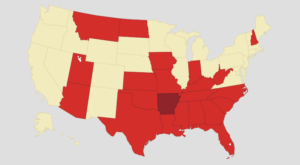
LGBTQ Policy Spotlight: Efforts to Ban Health Care for Transgender Youth

In 2021 alone, legislatures in 22 states have introduced bills to ban best practice medical care for transgender young people. MAP’s report, Efforts to Ban Health Care for Transgender Youth, provides an overview of the legislative environment across the country, the harmful impacts these bills could have, as well a

The Disproportionate Impacts of COVID-19 on LGBTQ Households in the U.S.

In July/August 2020, NPR, The Robert Wood Johnson Foundation, and the Harvard T.H. Chan School of Public Health (NPR/RWJF/Harvard) conducted a five-part polling series to examine the impact of COVID-19 on households in the United States. The poll included a question allowing respondents to identify as LGBTQ. MAP’s report, The

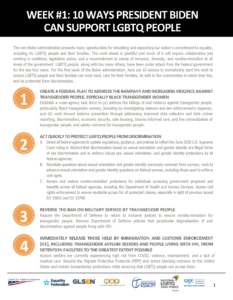
Week #1: 10 Ways President Biden Can Support LGBTQ People

This brief highlights 10 actions the Biden administration can immediately start to ensure LGBTQ people and their families can be protected from discrimination.

Religious Refusals in Health Care: A Prescription for Disaster

The Bottom Line Freedom of religion is an important American value, which is why it is already protected by the First Amendment of the Constitution. That freedom doesn’t give people the right to impose their beliefs on others or to discriminate. In January 2018, the Trump Administration’s announcement of a

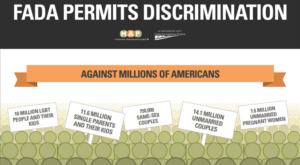
Creating a License to Discriminate: First Amendment Defense Act

The Bottom Line The freedom of religion is one of our nation’s most fundamental values, which is why it is already protected in the First Amendment of the U.S. Constitution. Americans also believe in equal treatment, and while religious freedom

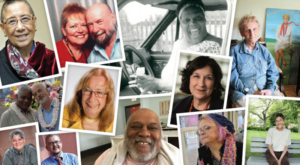
Understanding Issues Facing LGBT Older Adults

The Bottom Line It is estimated that there are approximately 2.7 million LGBT adults aged 50 and older in the United States, 1.1 million of whom are 65 and older. Understanding Issues Facing LGBT Older Adults provides an overview of their unique needs and experiences so that service providers, advocates,

A Closer Look: Bisexual Transgender People

The Bottom Line There is little data on the experiences of bisexual transgender people. Research on LGBT people is growing, but when the data are disaggregated to look at the disparities or resilience of particular groups under the LGBT umbrella, the sample size is often too small to analyze with

A Closer Look: Bisexual Older Adults

The Bottom Line America’s population is aging: by 2050, the number of people over the age of 65 will double to 83.7 million (from 43.1 million in 2012). And while the public perception of lesbian, gay, bisexual, and transgender (LGBT) people is largely one of a young community, there are

LGBT Policy Spotlight: HIV Criminalization Laws

The Bottom Line LGBT Policy Spotlight: HIV Criminalization Laws examines the problematic basis for HIV criminalization laws and their detriment to public health and the justice system. Ignoring modern medical knowledge, these laws carry harsh penalties such as 35-year prison terms and registration as a sex offender for behaviors now

Invisible Majority: The Disparities Facing Bisexual People and How to Remedy Them

The Bottom Line During the past decade, the United States has witnessed growing understanding and acceptance of lesbian, gay, bisexual, and transgender (LGBT) people and increased legal protections based on sexual orientation and gender identity. Rarely, however, have the experiences and lives of bisexual people, who comprise more than half

Join Our Community

Get research updates, stories, and ways to support.