You are here:

Paying an Unfair Price: The Financial Penalty for LGBT People of Color

Authors

Movement Advancement Project
Center for American Progress

Partners

Center for Community Change
MALDEF
The Center For Popular Democracy
League of United Latin American Citizens
National Black Justice Coalition
National Action Network
National Association of Social Workers
National Education Association
NQAPIA

Report Resources

Paying An Unfair Price: The Financial Penalty for LGBT People of Color
Download

Recommended Citation

Movement Advancement Project and Center for American Progress. April 2015. Paying an Unfair Price: The Financial Penalty for LGBT People of Color in America. https://mapresearch.org/report/paying-an-unfair-price-the-financial-penalty-for-lgbt-people-of-color/.

The Bottom Line

Paying an Unfair Price: The Financial Penalty for LGBT People of Color in America documents how systemic failures to protect some students, recognize diverse families, and protect people from discrimination drive and trap LGBT people of color into a devastating cycle of poverty. The report details the ways in which a wide array of legal failures, combined with health and wealth disparities faced by people of color in general, result in higher poverty rates and increased economic insecurity for America’s 3 million LGBT people of color.

  • The Law Fails to Protect LGBT People of Color and Their Families from Discrimination. Anti-LGBT laws that harm the financial well-being of LGBT people disproportionately affect LGBT people of color, resulting in lower incomes and making it harder to save for the future or to cover basic necessities. In other cases, these same legal inequalities burden LGBT people with higher costs for essentials like housing, healthcare, health insurance, and education.
  • The Law Fails to Recognize LGBT Families. LGBT people of color are more likely to be raising children than white LGBT people, and so the denial of marriage and legal parenting ties particularly harms LGBT families of color and undermines their financial stability. Among those harms: higher healthcare costs or the unfair denial of health insurance, lack of access to safety-net programs, higher taxes, the inability to access Social Security retirement and disability programs, and more.
  • The Law Fails to Protect LGBT Students, in Particular LGBT Students of Color. Upon entering the education system, bullying, harassment and violence together create key barriers to education for LGBT students of color. Barriers of race, sexual orientation, and gender identity are compounded in ways that can make it more difficult to obtain an affordable, quality education.

Paying an Unfair Price: The Financial Penalty for LGBT People of Color in America includes recommendations to reduce the unfair financial penalties experienced by LGBT people of color because of their sexual orientation or gender identity, as well as recommendations to address the systemic and persistent disparities that harm the economic security of people of color in the United States.
Related resources

Safe School Laws
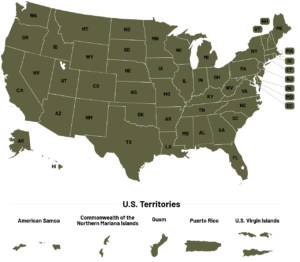
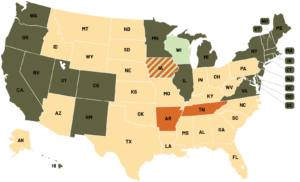
This map shows state school nondiscrimination laws that explicitly enumerate sexual orientation and/or gender identity as protected characteristics, as well as states that explicitly interpret existing prohibitions against sex discrimination to include discrimination based on sexual orientation or gender identity.
Anti-bullying
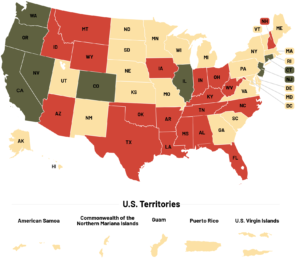
This map shows state anti-bullying laws that explicitly enumerate sexual orientation and/or gender identity as protected characteristics, as well as states that explicitly interpret existing prohibitions against sex discrimination to include discrimination based on sexual orientation or gender identity.
Nondiscrimination Laws
Non-discrimination laws protect LGBTQ people from employment, housing, public accommodations, credit, and other discrimination.
Employment Nondiscrimination
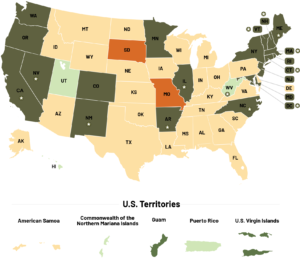
Employment non-discrimination laws protect people from being unfairly fired, not hired, or discriminated against in the workplace by private employers on the basis of gender identity or sexual orientation.
LGBTQ Curricular Laws
This map summarizes whether states have an LGBTQ-inclusive curricular standards law or any of the following LGBTQ-specific school censorship laws: “Don’t Say LGBTQ” laws, older laws censoring discussions of homosexuality, and parental opt-out/opt-in laws.
LGBTQ-Inclusive Curricular Standards
LGBTQ People
LGBTQ people in the United States have families, work hard to earn a living, pay taxes, and serve their communities and their country. MAP offers a collection of resources addressing the many aspects of LGBTQ people’s lives.
LGBTQ People of Color

People of color in the United States are more likely to identify as LGBTQ than white people. It is estimated that one-third of LGBTQ people nationally are people of color. LGBTQ people of color have unique experiences both as LGBTQ people and as people of color. Research finds that they

Education
Every student, from kindergarten to college and beyond, deserves a fair chance to succeed in school and prepare for their future—including students who are LGBTQ. Given the importance of access to education for long-term economic security, the experiences of LGBTQ youth in schools is especially troubling.

Join our community

Get research updates, stories, and ways to support.