You are here:

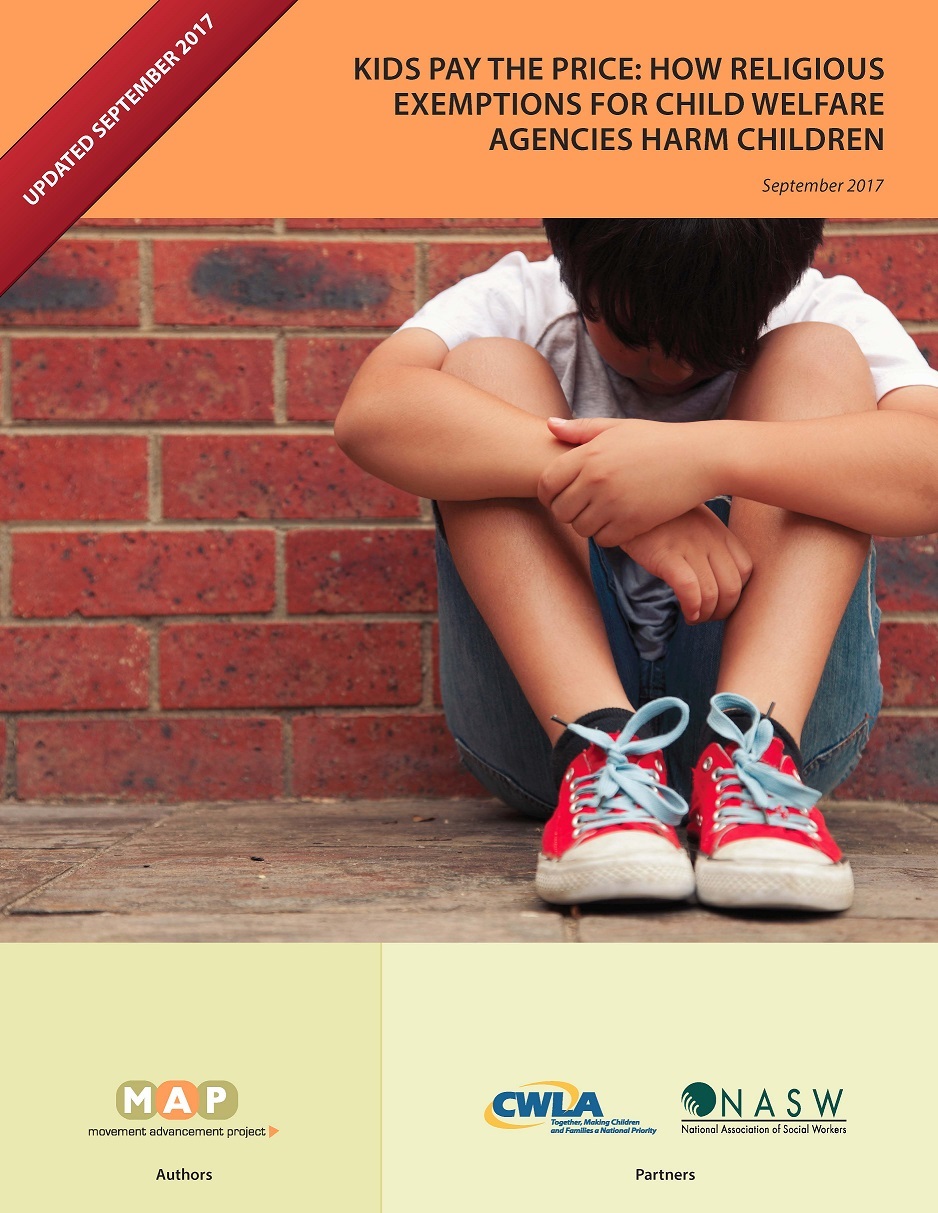
Kids Pay the Price: How Religious Exemptions for Child Welfare Services Harm Children

Authors

Movement Advancement Project

Partners

Child Welfare League of America
National Association of Social Workers

Report Resources

Kids Pay the Price: How Religious Exemptions for Child Welfare Services Harm Children
Download

Recommended Citation

Movement Advancement Project. September 2017. Kids Pay the Price: How Religious Exemptions for Child Welfare Services Harm Children. https://mapresearch.org/report/kids-pay-the-price-how-religious-exemptions-for-child-welfare-services-harm-children/.

The Bottom Line

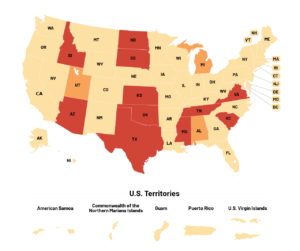
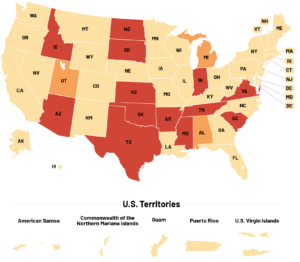
Freedom of religion is an important American value, which is why it is already protected by the First Amendment of the Constitution. That freedom doesn’t give people the right to impose their beliefs on others or to discriminate. Yet a growing number of states, and the federal government, have passed or are considering legislation that would allow child placement and adoption agencies to do just that, while providing government services paid for with taxpayer money.

Kids Pay the Price: How Religious Exemptions for Child Welfare Services Harm Children details how religious exemptions for child welfare providers hurt children and vulnerable families. Agencies that provide services to children and parents should focus on providing loving, stable homes for children and helping families in need. Instead, these laws encourage and enable adoption agencies and their workers to reject qualified parents who don’t share the agency’s or worker’s religious beliefs.

Rejecting qualified parents simply means a longer wait for children in government group homes and foster care rather than being adopted into forever homes,placed into kinship or guardianship placements, or reunited with their families. Families may go without supportive services, increasing the likelihood of children being removed.

As if these consequences weren’t serious enough, these laws also enable workers and organizations to prioritize their own religious beliefs when determining treatment options for children in their care. The potential for abuse of this legislation is far-reaching, as agencies and individual workers—like all Americans—have a broad range of beliefs, and these laws would legally prioritize those religious beliefs over the best interests of children.

To learn more about the campaign and to watch the TV ad rejected by FOX New Channel as too powerful, click here.
Related resources

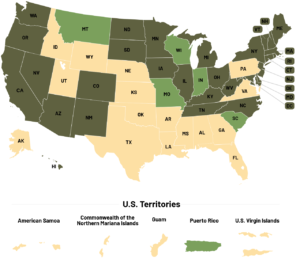
Child Welfare Nondiscrimination Laws
Child welfare nondiscrimination laws protect youth in the child welfare system from discrimination based on the youth's sexual orientation and gender identity.
Religious Exemptions
State religious exemption laws permit people, churches, non-profit organizations, and sometimes corporations to seek exemptions from state laws that burden their religious beliefs. These laws have recently been used as a defense when businesses discriminate against or refuse service to LGBTQ customers and same-sex couples.
Targeted: Child Welfare Services
LGBTQ People
LGBTQ people in the United States have families, work hard to earn a living, pay taxes, and serve their communities and their country. MAP offers a collection of resources addressing the many aspects of LGBTQ people’s lives.
Adoption
There are more than 440,000 children in foster care across the country, with more than 125,000 children waiting to be adopted. LGBTQ people have long served as foster and adoptive parents. Research shows they are more likely to foster or adopt than their peers. Despite this, some states have passed
Relationships at Risk: Why We Need to Update State Parentage Laws to Protect Children and Families (Infographics)

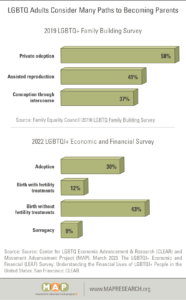
The following infographics are drawn from the Relationships at Risk: Why We Need to Update State Parentage Laws to Protect Children and Families, co-authored by the Movement Advancement Project (MAP), COLAGE, Family Equality, GLBTQ Legal Advocates & Defenders (GLAD), and NCLR.

Relationships at Risk: Why We Need to Update State Parentage Laws to Protect Children and Families
This report explains how the current patchwork of parentage laws across the country – many of which haven’t been updated in decades – leaves LGBTQ parents and their children vulnerable.
Supreme Court Ruling in the Fulton Case: What You Need to Know
What You Need to Know About the Equality Act
This post discusses why the Equality Act is vital legislation not just for LGBTQ people, but also for women, people of color, and immigrants.

Join our community

Get research updates, stories, and ways to support.