You are here:

Relationships at Risk: Why We Need to Update State Parentage Laws to Protect Children and Families

Authors

Movement Advancement Project
COLAGE
Family Equality
GLAD
NCLR

Report Resources

"Relationships at Risk: Why We Need to Update State Parentage Laws to Protect Children and Families"
Download Report
Press Release
Read More
Report Infographics
View Here

Recommended Citation

Movement Advancement Project. June 2023. Relationships at Risk: Why We Need to Update State Parentage Laws to Protect Children and Families. https://mapresearch.org/report/relationships-at-risk-why-we-need-to-update-state-parentage-laws-to-protect-children-and-families/.

Five leading national organizations that advocate for LGBTQ families joined forces on a new report, Relationships at Risk: Why We Need to Update State Parentage Laws to Protect Children and FamiliesMovement Advancement Project (MAP), COLAGE, Family Equality, GLBTQ Legal Advocates & Defenders (GLAD), and NCLR.  

The report explains how the current patchwork of parentage laws across the country – many of which haven’t been updated in decades – leaves LGBTQ parents and their children vulnerable. Nearly 1 in 3 LGBTQ adults in the U.S. are raising children under the age of 18, many of them in states that still have outdated laws. This means that far too many LGBTQ parents’ legal connections to their children are potentially at risk. 

Parentage is the legal relationship between a child and their parents, which is essential to children’s security and well-being. Parentage is crucial so that parents can make critical healthcare and education decisions for their children, and so that children have access to important benefits including insurance coverage, social security survivor benefits and inheritance. Legal parentage also ensures a child does not lose their important connection to a parent in circumstances such as the death of one parent or a change in the adult relationship between the parents.  

The report also details the following:

  • Seven key pathways to establishing parentage, which are only available in certain states to LGBTQ families.
  • Recent examples of modernized parentage laws in states like Rhode Island, Connecticut, and Colorado.
  • Recommendations for all states to update and improve parentage laws, which include: recognizing the diversity of families and ensure recognition of parents in children’s lives, improving access to protections and more consistency from state to state,  streamlining the process of adoption to secure children to their parents, and more.
Related resources

Family Leave Laws
State family leave laws covering same-sex couples govern whether an LGBT person can take leave from work to care for their same-sex spouse or partner.
Parental Recognition Laws
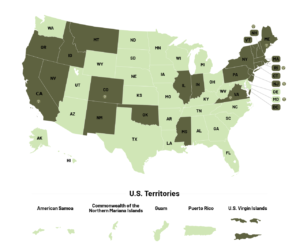
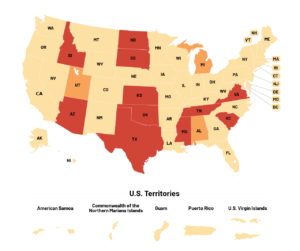
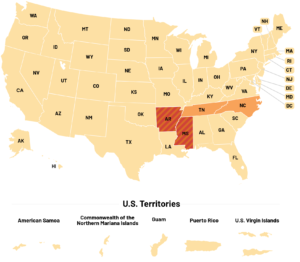
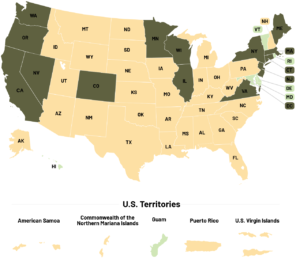
Legal recognition of the parent-child relationship ("parentage") is important for many reasons, from healthcare decisions and school settings to economic security, everyday life, and much more. These maps illustrate some of the pathways to parental recognition that are especially important for LGBTQ families.
Religious Exemptions
State religious exemption laws permit people, churches, non-profit organizations, and sometimes corporations to seek exemptions from state laws that burden their religious beliefs. These laws have recently been used as a defense when businesses discriminate against or refuse service to LGBTQ customers and same-sex couples.
Marriage & Relationship Recognition
States with the freedom to marry do not ban same-sex couples from entering into legal marriages. However, most states still have constitutional amendments, statutes, or both banning marriage for same-sex couples, even after the 2015 Supreme Court case Obergefell extended marriage equality nationwide.
Targeted: Marriage Solemnization by Public Officials
LGBTQ People
LGBTQ people in the United States have families, work hard to earn a living, pay taxes, and serve their communities and their country. MAP offers a collection of resources addressing the many aspects of LGBTQ people’s lives.
LGBTQ Families
LGBTQ families are part of the fabric of neighborhoods and communities across the United States. An estimated two million children are being raised by LGBTQ parents. Decades of research shows that children with LGBTQ parents grow up as happy, healthy and well-adjusted as their peers.
Adoption
There are more than 440,000 children in foster care across the country, with more than 125,000 children waiting to be adopted. LGBTQ people have long served as foster and adoptive parents. Research shows they are more likely to foster or adopt than their peers. Despite this, some states have passed
Talking About Family Recognition Laws & LGBTQ Families
Family recognition laws establish a secure legal relationship between a child and their parent or parents. Learn conversation approaches that help people understand why strong legal child-parent ties are essential to a child’s security and well-being and why families—no matter how they are formed—should be treated equally under the law.

Join our community

Get research updates, stories, and ways to support.