You are here:

Telling a New Southern Story: LGBTQ Resilience, Resistance, and Leadership

Authors

Movement Advancement Project
Campaign for Southern Equality

Partners

Equality Federation

Report Resources

Telling a New Southern Story: LGBTQ Resilience, Resistance, and Leadership (PDF)
Download
Executive Summary (PDF)
Download
Infographics
Download
Press Release: New Report on LGBTQ People in U.S. South Highlights Unique Challenges and Resilience
Visit

Recommended Citation

Movement Advancement Project. July 2020. Telling a New Southern Story: LGBTQ Resilience, Resistance, and Leadership. https://mapresearch.org/report/telling-a-new-southern-story-lgbtq-resilience-resistance-and-leadership/.

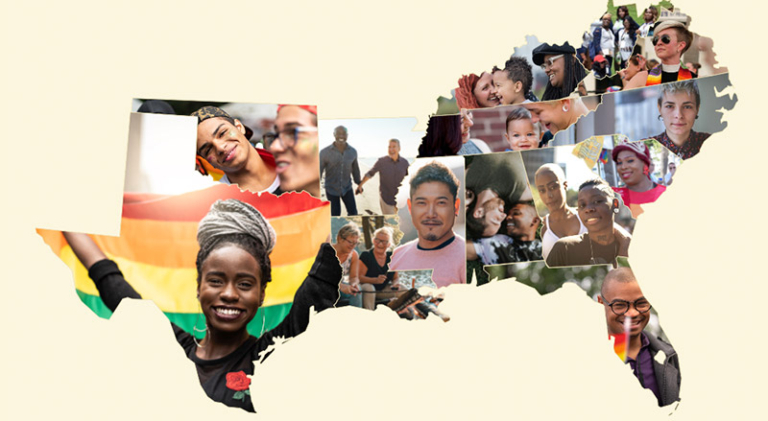
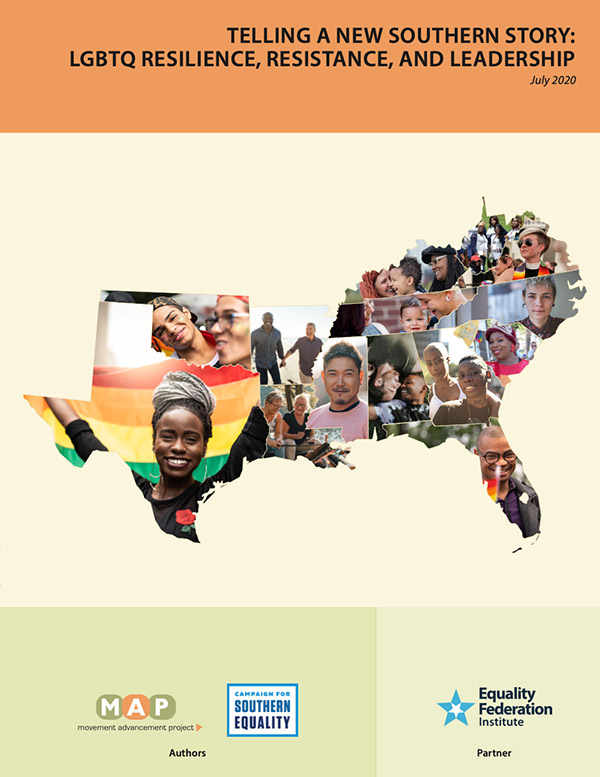
Despite being home to the most hostile policy landscape in the country for LGBTQ issues, the South is also home to some of the most innovative, resilient, and effective LGBTQ organizing and activism in the country. The Movement Advancement Project released a new report, Telling a New Southern Story: LGBTQ Resilience, Resistance, and Leadership, which explores the unique experiences of LGBTQ Southerners and the innovative ways they build community, provide direct support, and make cultural and political change in the region.

Released in partnership with the Campaign for Southern Equality and Equality Federation, this report examines the experiences and advocacy strategies of LGBTQ people in the U.S. South. Despite the recent U.S. Supreme Court ruling affirming employment discrimination protections nationwide, 93% of LGBTQ Southerners live in a state with a low or negative LGBTQ equality score, reflecting laws which impact virtually every aspect of daily life. Additionally, key cornerstones of Southern culture—including religious conservatism, one-party control, and the legacy of slavery—make the South unlike any other region in the country.
The report outlines challenges that LGBTQ people in the South face, including economic insecurity, criminalization, violence and harassment, and disparities in health access and outcomes. However, the work of LGBTQ advocates in the region demonstrates innovation and creativity in responding to these challenges. LGBTQ Southerners often work outside the state legislative context, focus on community building, and directly address the immediate needs of LGBTQ Southerners by providing housing, food, and healthcare access. Advocates are adept at seizing opportunities to educate and change hearts and minds.
Southern LGBTQ organizations spotlighted in report include Equality Florida, Gender Benders (South Carolina), Knights & Orchids Society (Alabama), Nationz Foundation (Virginia), Southerners on New Ground (North Carolina), STAY Project (Appalachia region), and Transform Houston.


A companion report, LGBTQ Policy Spotlight: Mapping LGBTQ Equality in the U.S. Southdetails the laws and policies impacting LGBTQ people in 14 Southern states.

Related resources

Support for Transgender People is Higher Than Headlines Suggest
This partner brief from MAP and Advocates for Trans Equality (A4TE) offers new analysis which shows that transgender people are widely accepted and supported by their families, workplaces, faith communities, and more.
Talking About ID Update Bans hero image
Talking About ID Update Bans
Identification documents are vital keys that open doors to so many parts of everyday life. Learn about conversations that can help conflicted audiences understand what’s at stake when states seek to ban transgender people from updating the gender marker on their ID.
Bans on Transgender People Using Public Bathrooms and Facilities According to their Gender Identity
Bans on Transgender Youth Participation in Sports
Bans on Best Practice Medical Care for Transgender Youth
Bans on best-practice medical care represent one of the most extreme and coordinated political attacks on transgender people in recent years. These bills target transgender youth by blocking their access to best-practice medical care.
Bans on Insurance Exclusions of Transgender-Related Care
Transgender People

An estimated 2.8 million people ages 13 and older in the U.S. identify as transgender. Transgender people live in every state, are ethnically and racially diverse, and offer a range of skills, expertise, and experiences. In recent years, the collective work of movement organizations has resulted in greater visibility and

LGBTQ People
LGBTQ people in the United States have families, work hard to earn a living, pay taxes, and serve their communities and their country. MAP offers a collection of resources addressing the many aspects of LGBTQ people’s lives.
Rural

Popular culture images of LGBTQ people suggest that most LGBTQ people live in cities or on the coasts. Yet an estimated three million or more LGBTQ people call rural America home. LGBTQ people are part of the fabric of rural and urban communities alike, working as teachers and ministers, small

Join our community

Get research updates, stories, and ways to support.