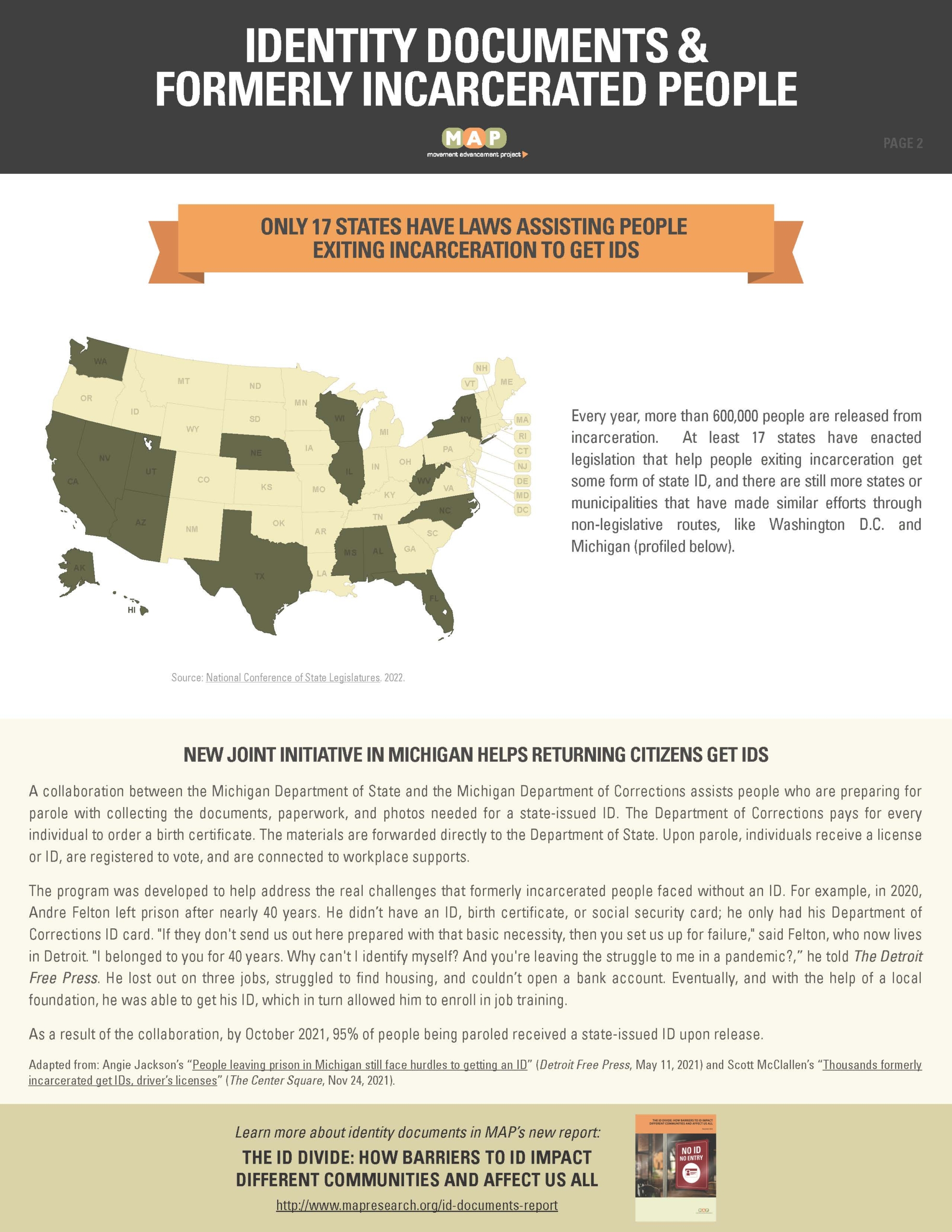
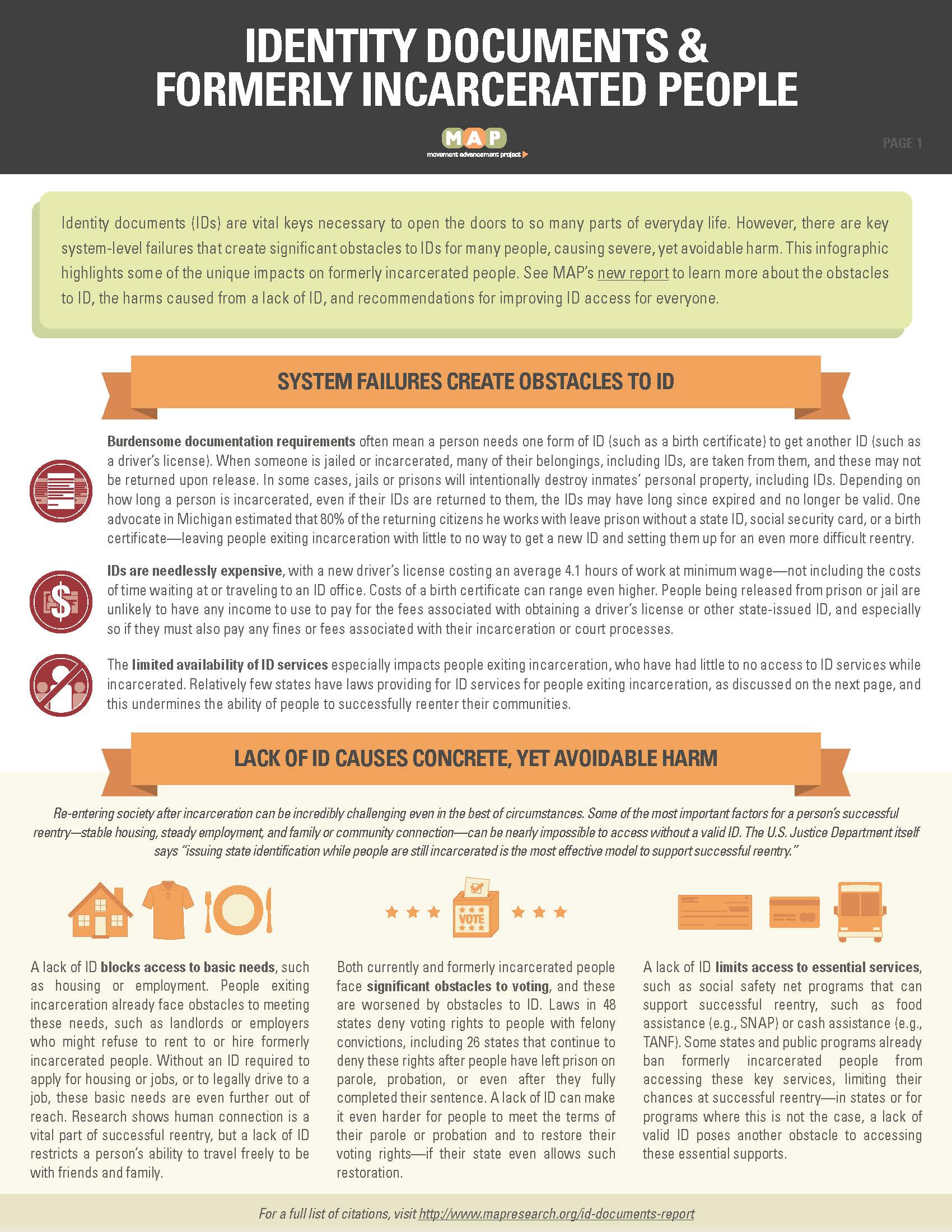
Infographic that highlights some of the ID obstacles that uniquely impact formerly incarcerated people.
You are here:
- Home
- Infographic
- Identity Documents & Forme…
Identity Documents & Formerly Incarcerated People
Related resources

Talking About ID Update Bans
Identification documents are vital keys that open doors to so many parts of everyday life. Learn about conversations that can help conflicted audiences understand what’s at stake when states seek to ban transgender people from updating the gender marker on their ID.

Voter Identification Requirements for In-Person Voting
This map details how states differ on whether identification must be shown by voters voting in-person and which forms of identification are considered acceptable.

Voting Rights for Formerly Incarcerated People
Every state has laws outlining who is eligible to vote, and almost all states restrict voting for those who are currently incarcerated for a felony offense—though a few states allow citizens to vote while incarcerated. States differ on when and how formerly incarcerated people can have their voting rights restored.
Voting Policy Resources
These resources help build understanding of the opposing trends in election policies and their effects on how voters cast their ballots, in addition to the security and independence of our elections.
Voter ID
In a majority of states, voters show some form of identification when casting their ballot in-person. Some states have unnecessarily strict identification requirements or procedures in place that create barriers for eligible voters who may not be able to obtain a specific form of required ID.
Voting Rights for Formerly Incarcerated People
The United States has one of the highest rates of incarceration in the industrialized world. These resources discuss states’ policies that determine when and how formerly incarcerated people can have their voting rights restored.
LGBTQ People
LGBTQ people in the United States have families, work hard to earn a living, pay taxes, and serve their communities and their country. MAP offers a collection of resources addressing the many aspects of LGBTQ people’s lives.
Equality & Democracy
When comparing the data of MAP’s LGBTQ Equality Maps and the Democracy Maps, the distribution of states into various levels of progress show similar patterns for both the struggle for equality and voting rights.

Kansas anti-trans law targets IDs and birth certificates — and the right to vote
This opinion piece is written by Logan Casey, MAP’s Director of Policy Research, and originally appeared in the Kansas Reflector on March 4, 2026.
No related resources found