You are here:

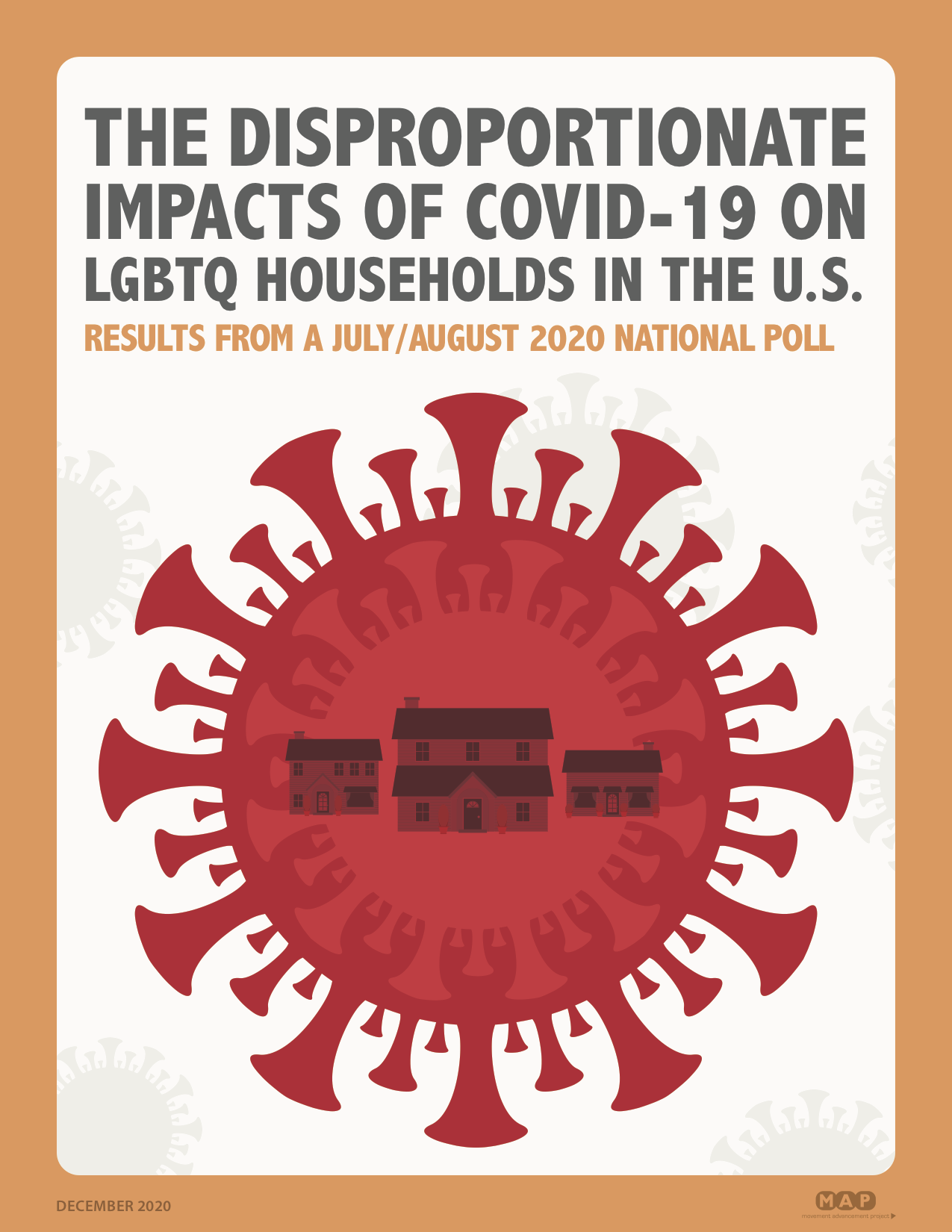
The Disproportionate Impacts of COVID-19 on LGBTQ Households in the U.S.

Authors

Movement Advancement Project

Report Resources

The Disproportionate Impacts of COVID-19 on LGBTQ Households in the U.S. (PDF)
Download
Infographics
Download
Press Release: New Report Finds LGBTQ People Are Disproportionately Impacted by COVID-19
Visit
USA TODAY Article: 'I lost everything': LGBTQ people are bearing a bigger brunt of the pandemic, report shows
Visit
Related Report: Understanding the Impact of COVID-19 on the LGBTQI Movement
Visit
Related Report: The Delta Variant & the Disproportionate Impacts of COVID-19 on LGBTQ Households in the U.S. (December 2021)
Visit

Recommended Citation

Movement Advancement Project. December 2020. The Disproportionate Impacts of COVID-19 on LGBTQ Households in the U.S. https://mapresearch.org/report/the-disproportionate-impacts-of-covid-19-on-lgbtq-households-in-the-u-s/.

In July/August 2020, NPR, The Robert Wood Johnson Foundation, and the Harvard T.H. Chan School of Public Health (NPR/RWJF/Harvard) conducted a five-part polling series to examine the impact of COVID-19 on households in the United States. The poll included a question allowing respondents to identify as LGBTQ. MAP’s report, The Disproportionate Impacts of COVID-19 on LGBTQ Households in the U.S., summarizes the key findings about the experiences of LGBTQ people and their households and offers comparisons to the non-LGBTQ respondents in this broader national poll.

The report illustrates that LGBTQ households are more likely than non-LGBTQ households to experience job losses, serious financial problems, issues accessing healthcare, and increased challenges navigating at-home learning for their children as a result of the pandemic. These challenges are especially true for Black and Latinx people, as well as for LGBTQ people living in the South and the Midwest regions of the United States.

These new polling data reveal that LGBTQ people and their households, especially LGBTQ people of color and low-income LGBTQ people, are particularly vulnerable to the pandemic, pointing to the need for targeted assistance and explicit protections from discrimination as our country continues to address the detrimental effects of the COVID-19 pandemic.

About the poll:
From Harvard: “Interviews were conducted online and via telephone (cellphone and landline), July 1–August 3, 2020, among a nationally representative, probability-based sample of 3,454 adults age 18 or older in the U.S. Data collection was conducted in English and Spanish by SSRS (Glen Mills, PA), an independent research company. The margin of sampling error, including the design effect, was ±3.3 percentage points at the 95% confidence level for national data.”  Among the total sample of 3,454 adults, 353 identified as LGBTQ. Further methodological information is available at the end of each of Harvard’s reports in the series.
Related resources

Nondiscrimination Laws
Non-discrimination laws protect LGBTQ people from employment, housing, public accommodations, credit, and other discrimination.
Employment Nondiscrimination
Employment non-discrimination laws protect people from being unfairly fired, not hired, or discriminated against in the workplace by private employers on the basis of gender identity or sexual orientation.
Family Leave Laws
State family leave laws covering same-sex couples govern whether an LGBT person can take leave from work to care for their same-sex spouse or partner.
LGBTQ People
LGBTQ people in the United States have families, work hard to earn a living, pay taxes, and serve their communities and their country. MAP offers a collection of resources addressing the many aspects of LGBTQ people’s lives.
Regional

The lives and experiences of LGBTQ people across the United States varies based on where they live. For example, legal and legislative progress on issues affecting LGBTQ people has not advanced equally across the United States. There are variations from state to state and region to region. Positive policy innovations

LGBTQ Families
LGBTQ families are part of the fabric of neighborhoods and communities across the United States. An estimated two million children are being raised by LGBTQ parents. Decades of research shows that children with LGBTQ parents grow up as happy, healthy and well-adjusted as their peers.
COVID-19

The COVID-19 pandemic impacted all of us, making 2020 a year filled with challenges like no other. For individuals and families, workers and businesses, and social change organizations, the COVID-19 pandemic upended how we learn, work, and connect. In the wake of the pandemic, MAP began exploring its disproportionate impacts

Economic Security

LGBTQ people in the United States have the same worries as others when it comes to finding good jobs, providing for their families, and saving for the future. But research consistently finds that LGBTQ people and their families are more likely to struggle economically and experience higher rates of poverty

Talking About Family Recognition Laws & LGBTQ Families
Family recognition laws establish a secure legal relationship between a child and their parent or parents. Learn conversation approaches that help people understand why strong legal child-parent ties are essential to a child’s security and well-being and why families—no matter how they are formed—should be treated equally under the law.

Join our community

Get research updates, stories, and ways to support.