You are here:

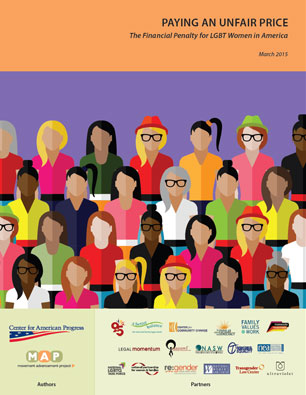
Paying an Unfair Price: The Financial Penalty for LGBT Women in America

The Bottom Line

Authors

Movement Advance Project
Center for American Progress

Partners

A Better Balance
Center for Community Change
The Center For Popular Democracy
Family Values @ Work
Forward Together
Legal Momentum
National Association of Social Workers
National Center for Transgender Equality
National Asian Pacific American Women's Forum
National Education Association
National LGBTQ Task Force
National Partnership for Women & Families
9to5
Re:Gender
National Women's Law Center
Transgender Law Center
UltraViolet

Report Resources

Unfair Price: The Financial Penalty for LGBT Women in America
Download

Recommended Citation

Movement Advancement Project and Center for American Progress. March 2015. Paying an Unfair Price: The Financial Penalty for LGBT Women in America. https://mapresearch.org/report/paying-an-unfair-price-the-financial-penalty-for-lgbt-women-in-america/.

The economic disparities experienced by LGBT women result from the stigma, discrimination, and the legal disadvantages they experience because they are women and because they are LGBT. Paying an Unfair Price: The Financial Penalty for LGBT Women in America spotlights how LGBT women face unique challenges in three major areas that dramatically increase their economic insecurity and poverty rates:

  • JOBS: LGBT women struggle to find and keep good jobs. LGBT women face discrimination when looking for work and while on the job. The result is lower pay and fewer opportunities to advance. Workplaces also may be unwelcoming, hostile, or even physically unsafe. Transgender women face added challenges because they often cannot obtain accurate identity documents necessary for work.
  • HEALTH: LGBT women face challenges to good health that impact economic security. Healthcare can be more costly for LGBT women because of discriminatory laws, discrimination by providers, insurance exclusions for transgender people, and inadequate reproductive health coverage. The result: LGBT women are at greater risk for health problems that can affect quality of life and threaten their ability to work, and they often must pay higher costs for healthcare.
  • FAMILY RECOGNITION: Lack of support for LGBT women and their families results in higher costs. In many states, LGBT women still are not able to legally marry their partner or establish legal ties to their children. This means LGBT women may not be able to access affordable health insurance, safety net programs meant to keep families out of poverty, and job-protected leave to care for a sick partner. What’s more, like all women in the United States, LGBT women often are forced by law to make difficult and costly choices that can threaten their family’s economic security. The United States, for example, is the only developed country that does not offer paid parental leave.

Paying an Unfair Price: The Financial Penalty for LGBT Women in America offers broad policy recommendations to help address these harmful disparities and improve the lives of LGBT women.
Related resources

Support for Transgender People is Higher Than Headlines Suggest
This partner brief from MAP and Advocates for Trans Equality (A4TE) offers new analysis which shows that transgender people are widely accepted and supported by their families, workplaces, faith communities, and more.
Talking About ID Update Bans hero image
Talking About ID Update Bans
Identification documents are vital keys that open doors to so many parts of everyday life. Learn about conversations that can help conflicted audiences understand what’s at stake when states seek to ban transgender people from updating the gender marker on their ID.
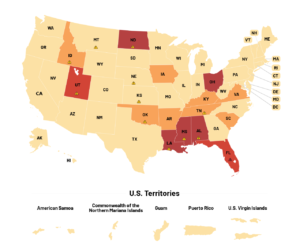
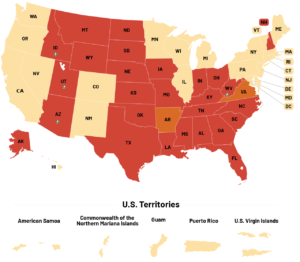
Bans on Transgender People Using Public Bathrooms and Facilities According to their Gender Identity
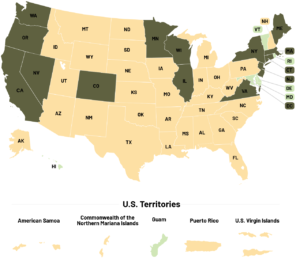
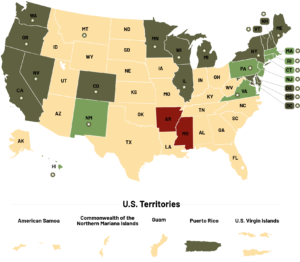
Family Leave Laws
State family leave laws covering same-sex couples govern whether an LGBT person can take leave from work to care for their same-sex spouse or partner.
Nondiscrimination Laws
Non-discrimination laws protect LGBTQ people from employment, housing, public accommodations, credit, and other discrimination.
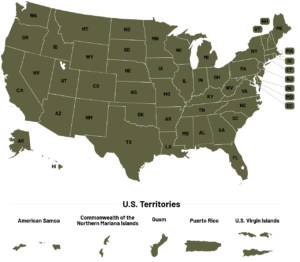
Employment Nondiscrimination
Employment non-discrimination laws protect people from being unfairly fired, not hired, or discriminated against in the workplace by private employers on the basis of gender identity or sexual orientation.
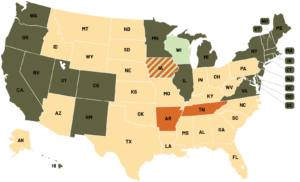
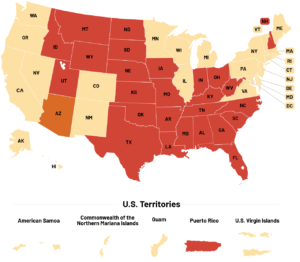
Bans on Transgender Youth Participation in Sports
Bans on Best Practice Medical Care for Transgender Youth
Bans on best-practice medical care represent one of the most extreme and coordinated political attacks on transgender people in recent years. These bills target transgender youth by blocking their access to best-practice medical care.
Bans on Insurance Exclusions of Transgender-Related Care

Join our community

Get research updates, stories, and ways to support.