You are here:

Securing Legal Ties for Children Living in LGBT Families

Authors

Movement Advancement Project
Family Equality Council
Center for American Progress

Partners

The Donaldson Adoption Institute
Equality Federation

Report Resources

Securing Legal Ties for Children Living in LGBT Families
Download

Recommended Citation

Movement Advancement Project, Family Equality Council, and the Center for American Progress. July 2012. Securing Legal Ties for Children Living in LGBT Families: A State Strategy and Policy Guide. https://mapresearch.org/report/securing-legal-ties-for-children-living-in-lgbt-families/.

The Bottom Line

The lack of legal recognition for lesbian, gay, bisexual and transgender (LGBT) families harms children and threatens their ability to thrive. Children may go without health insurance or a parent may be limited in making healthcare decisions for them. Children in foster care are denied permanent homes, even when there are qualified, loving LGBT families ready, able and waiting to adopt. Children may be wrested away from the only parents they know when relationships dissolve or a parent dies or becomes disabled. And they may be unable to access financial lifelines and safety net programs designed to support families during family crisis.

Securing Legal Ties for Children Living in LGBT Families: A State Strategy and Policy Guide examines the outdated state laws—particularly in the areas of marriage and parenting—that largely ignore and routinely harm the roughly two million children being raised by LGBT parents. It provides an overview of the diversity and demographics of LGBT families, looks at how the paths to parenthood for LGBT parents intersect with archaic laws and practices that often leave children without legal ties to both their parents, and explores the ways in which that lack of legal ties hurts children being raised in LGBT families.

In addition, Securing Legal Ties for Children Living in LGBT Families (which expands on the content from All Children Matter: How Legal and Social Inequalities Hurt LGBT Families) offers a detailed framework for state policymakers to draft, pass and enact new laws that protect all children–including those living in LGBT families and other contemporary family structures–and recommendations for amending, repealing or overturning discriminatory laws that leave children without the security of legal ties to their parents.
Related resources

Family Leave Laws
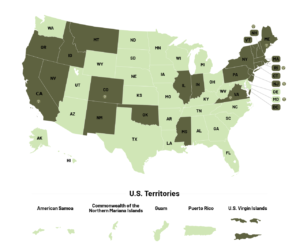
State family leave laws covering same-sex couples govern whether an LGBT person can take leave from work to care for their same-sex spouse or partner.
Parental Recognition Laws
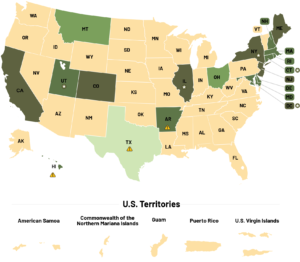
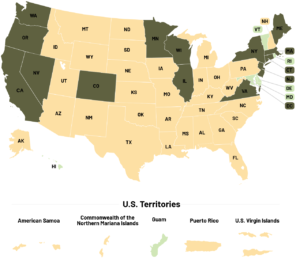
Legal recognition of the parent-child relationship ("parentage") is important for many reasons, from healthcare decisions and school settings to economic security, everyday life, and much more. These maps illustrate some of the pathways to parental recognition that are especially important for LGBTQ families.
Fertility Healthcare Coverage
LGBTQ People
LGBTQ people in the United States have families, work hard to earn a living, pay taxes, and serve their communities and their country. MAP offers a collection of resources addressing the many aspects of LGBTQ people’s lives.
LGBTQ Families
LGBTQ families are part of the fabric of neighborhoods and communities across the United States. An estimated two million children are being raised by LGBTQ parents. Decades of research shows that children with LGBTQ parents grow up as happy, healthy and well-adjusted as their peers.
Adoption
There are more than 440,000 children in foster care across the country, with more than 125,000 children waiting to be adopted. LGBTQ people have long served as foster and adoptive parents. Research shows they are more likely to foster or adopt than their peers. Despite this, some states have passed
Talking About Family Recognition Laws & LGBTQ Families
Family recognition laws establish a secure legal relationship between a child and their parent or parents. Learn conversation approaches that help people understand why strong legal child-parent ties are essential to a child’s security and well-being and why families—no matter how they are formed—should be treated equally under the law.
Community Acceptance: Resources for Communities Working with Transgender & Gender Diverse Children

Many people don’t understand what it means to be transgender or gender diverse, so some parents or family members struggle when their child comes out as transgender or gender diverse. It is natural for parents to have questions, and this document, jointly created by the Biden Foundation, Gender Spectrum, and

The Power of Affirming Community: How Local Spaces Support LGBTQ Youth Outcomes

Join our community

Get research updates, stories, and ways to support.