You are here:

Paying an Unfair Price: The Financial Penalty for Being Transgender in America

Authors

Movement Advancement Project
Center for American Progress

Partners

Center for Community Change
The Center For Popular Democracy
National Association of Social Workers
National Center for Transgender Equality
Transgender Law Center
National Education Association

Report Resources

Unfair Price: The Financial Penalty for Being Transgender in America
Download

Recommended Citation

Movement Advancement Project and Center for American Progress. February 2015. Paying an Unfair Price: The Financial Penalty for Being Transgender in America. https://mapresearch.org/report/paying-an-unfair-price-the-financial-penalty-for-being-transgender-in-america/.

The Bottom Line

Paying an Unfair Price: The Financial Penalty for Being Transgender in America paints a stark portrait of the economic insecurities that leave transgender people with high rates of unemployment and poverty. Transgender Americans face clear financial penalties simply because they are transgender and are left economically vulnerable because of two primary failures of law:

  • Pervasive discrimination and a lack of legal protections mean that transgender people struggle to find work and safe housing, face challenges updating critical identity documents, make less on the job, and have higher medical costs than their non-transgender peers.
  • Failure to adequately protect transgender students means that transgender people and their families often face a hostile, unsafe, or unwelcoming school environments. Harassment, bullying, and violence can make it difficult, if not impossible, for transgender students to obtain the skills and education they need to succeed.

Paying an Unfair Price: The Financial Penalty for Being Transgender in America offers broad recommendations for helping strengthen economic security for transgender Americans, such as instituting basic nondiscrimination protections at the federal and state level and protecting students from discrimination and harassment on the basis of gender identity.
Related resources

Support for Transgender People is Higher Than Headlines Suggest
This partner brief from MAP and Advocates for Trans Equality (A4TE) offers new analysis which shows that transgender people are widely accepted and supported by their families, workplaces, faith communities, and more.
Talking About ID Update Bans hero image
Talking About ID Update Bans
Identification documents are vital keys that open doors to so many parts of everyday life. Learn about conversations that can help conflicted audiences understand what’s at stake when states seek to ban transgender people from updating the gender marker on their ID.
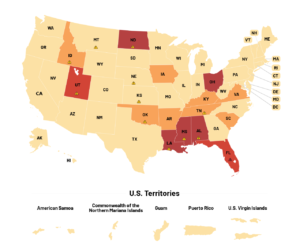
Bans on Transgender People Using Public Bathrooms and Facilities According to their Gender Identity
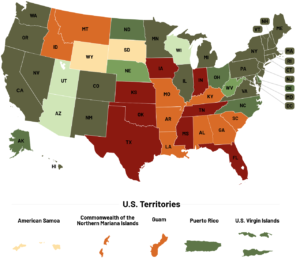
Identity Document Laws and Policies
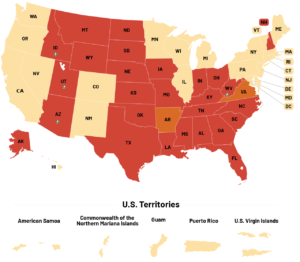
These maps illustrate the state laws and administrative polices governing the processes by which an individual can change the gender marker on their driver's license and/or birth certificate to accurately reflect their gender identity, sometimes including intrusive and outdated requirements, such as proof of sex reassignment surgery and court orders.
Transgender Healthcare “Shield” Laws
Nondiscrimination Laws
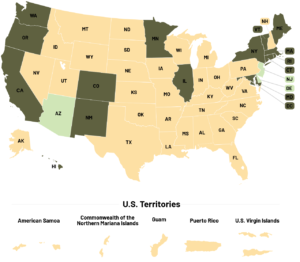
Non-discrimination laws protect LGBTQ people from employment, housing, public accommodations, credit, and other discrimination.
Employment Nondiscrimination
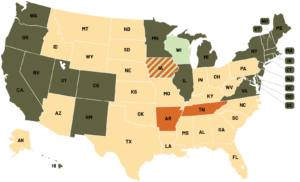
Employment non-discrimination laws protect people from being unfairly fired, not hired, or discriminated against in the workplace by private employers on the basis of gender identity or sexual orientation.
Bans on Transgender Youth Participation in Sports
Bans on Best Practice Medical Care for Transgender Youth
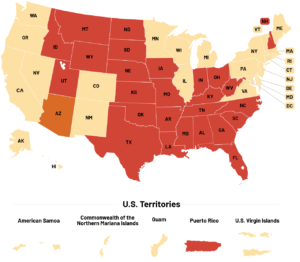
Bans on best-practice medical care represent one of the most extreme and coordinated political attacks on transgender people in recent years. These bills target transgender youth by blocking their access to best-practice medical care.

Join our community

Get research updates, stories, and ways to support.