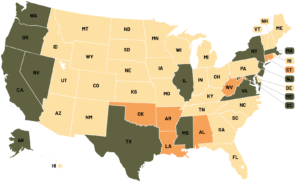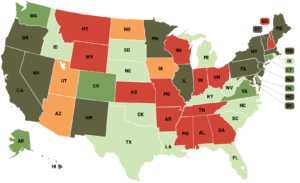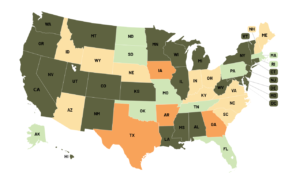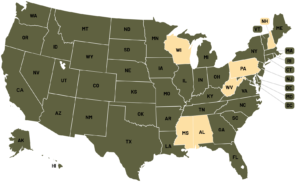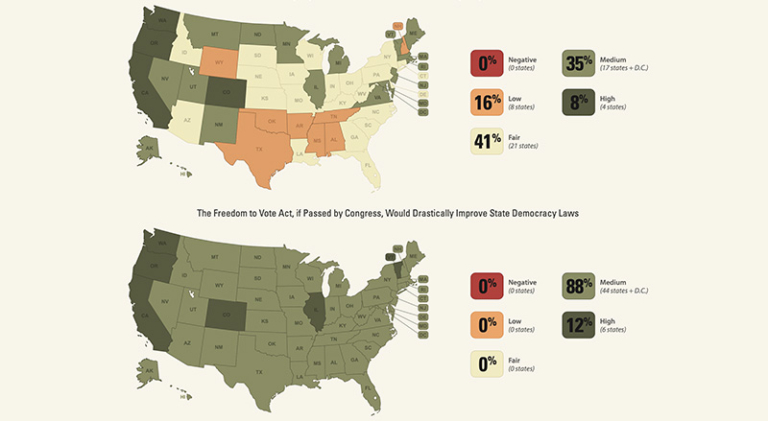
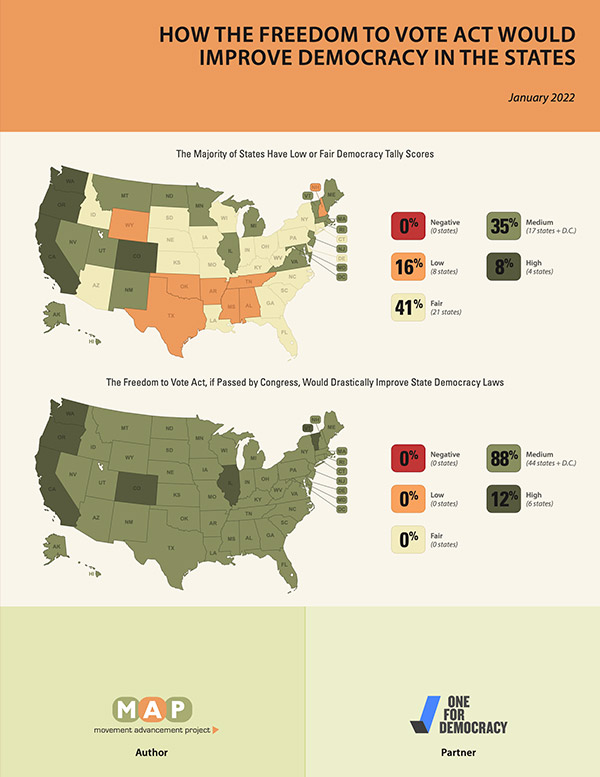
MAP’s new brief, How the Freedom to Vote Act Would Improve Democracy in the States, outlines some of the emerging threats to the independence and integrity of our democracy, and also shows the startling difference in access to voting and democracy by state.
The brief also emphasizes the impact the Freedom to Vote Act would have for voters nationwide, including: establishing national standards for automatic voter registration, expanding voting locations and early voting, cutting wait times to vote in person, streamlining voter ID requirements, and protecting election independence and integrity.
If Congress passes this legislation, every state would have either a High or Medium Democracy Tally rank.
Currently, nearly 60% of Americans live in states with inadequate voting laws, according to the Democracy Maps. If the Freedom to Vote Act, a comprehensive federal bill that would create critical standards for voting rights in all states, passed, state voting policies would shift dramatically to 100% of Americans would live in states with at least a medium Democracy Tally.
The Freedom to Vote Act would help America uphold its promise of democracy and freedom, give all citizens a more equal voice, and protect our democracy from those who want partisan, rather than independent, oversight of elections.
MAP’s Democracy Maps initiative provides detailed tracking of 44 election laws and policies across all 50 states—and shows how the national landscape would change if Congress passed the federal Freedom to Vote Act.