You are here:

Identity Documents

Identity documents (IDs), like driver’s licenses or birth certificates, are so commonplace in our everyday life that many people don’t notice how important they are. Identity documents are vital keys necessary to unlock the doors to everything from driving a car and getting a library card to opening a bank account, getting a job, and, increasingly, voting. 

Despite the clear importance of IDs, there are key system-level failures that make it too difficult for many people to get and maintain accurate identity documents. This in turn leads to severe, yet easily avoidable, harms for many people of all backgrounds—though these harms often impact different communities in different ways. Importantly, however, these systems-level failures and roadblocks can be fixed. 

The following resources offer systems-level solutions that can improve access to IDs. Through clear, achievable ID policies that promote public safety and good governance, people can have their basic needs met and have an equal opportunity to participate in civic and everyday life.  

Related Resources

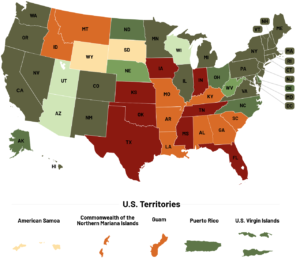
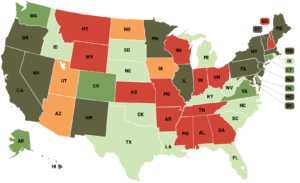
Voter Identification Requirements for In-Person Voting
This map details how states differ on whether identification must be shown by voters voting in-person and which forms of identification are considered acceptable.
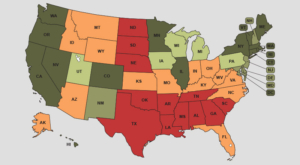
Identity Document Laws and Policies
These maps illustrate the state laws and administrative polices governing the processes by which an individual can change the gender marker on their driver's license and/or birth certificate to accurately reflect their gender identity, sometimes including intrusive and outdated requirements, such as proof of sex reassignment surgery and court orders.
Barriers to ID Access Impact Everyone — Here’s Why.
Barriers to IDs create and perpetuate a harmful cycle that makes existing inequalities worse and harms those who are less able to access the right documents. A new MAP infographic highlights these barriers and the unique ways not having an ID impacts different communities.
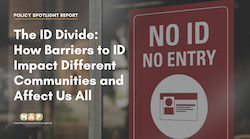
The ID Divide: How Barriers to ID Impact Different Communities and Affect Everyone
This report illustrates clear, achievable ID policies that promote public safety and good governance while still ensuring that people can have their basic needs met and have an equal opportunity to participate in civic and everyday life.
Democracy 101: Understanding Voter ID Laws
This brief explores the history and evolution of voter ID laws, the current landscape and legislative proposals, and examines the harms these policies impose, particularly on marginalized communities.
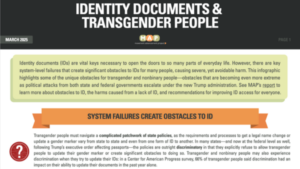
Fact Sheet: Identity Documents and Transgender People

This fact sheet comes from MAP’s full-length report and highlights the unique impacts of system-level failures related to ID documents on transgender and nonbinary people.

Freedom Under Fire: The Far Right’s Battle to Control America
Across virtually every aspect of life, people’s freedoms are under assault in the United States. This report connects the dots on how these extremist politicans' attempts aim to fundamentally remake this country.
Identity Documents
Identity documents (IDs), like driver’s licenses or birth certificates, are vital keys necessary to unlock the doors to everything from driving a car and getting a library card to opening a bank account, getting a job, and, increasingly, voting.
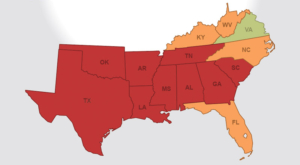
LGBTQ Policy Spotlight: Mapping LGBTQ Equality in the U.S. South

More LGBTQ people live in the U.S. South than in any other region of the United States. But for the one in three LGBTQ adults who call the South home, the South is the most hostile LGBTQ state policy landscape in the country. The Movement Advancement Project (MAP) released a

Mapping LGBTQ Equality: 2010 to 2020
This report presents a fresh perspective on the current status of LGBTQ equality in the states by examining MAP’s policy tally, encompassing nearly 40 LGBTQ-related laws and policies across all 50 states, the District of Columbia, and the five U.S. territories as of January 1, 2020.
Mapping Transgender Equality in the United States

The Bottom Line The lesbian, gay, bisexual and transgender (LGBT) community has seen both significant progress and painful setbacks recently. The 2015 Supreme Court ruling in favor of the freedom to marry was a major step toward legal equality, and there have been many successes since then at the federal,

Join Our Community

Get research updates, stories, and ways to support.