You are here:

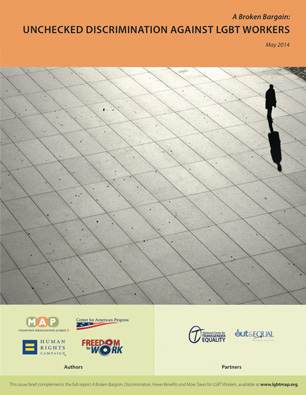
A Broken Bargain: Unchecked Discrimination Against LGBT Workers

Authors

Movement Advancement Project
Center for American Progress
Freedom to Work
Human Rights Campaign

Partners

National Center for Transgender Equality
Out & Equal Workplace Advocates

Report Resources

A Broken Bargain: Unchecked Discrimination Against LGBT Workers
Download

Recommended Citation

Movement Advancement Project, Center for American Progress, Freedom to Work, and Human Rights Campaign. May 2014. A Broken Bargain: Unchecked Discrimination Against LGBT Workers. https://mapresearch.org/report/a-broken-bargain-unchecked-discrimination-against-lgbt-workers/.

The Bottom Line

The basic American bargain is that those who work hard and meet their responsibilities should have the opportunity to get ahead. It is founded on the principle that workers will be judged based solely on their performance and qualifications—no matter who they are, what they look like, or where they are from. This basic bargain is not just an idea—it is embedded in laws that promote equal access to jobs and protect workers from discrimination. But these laws do not protect everyone.

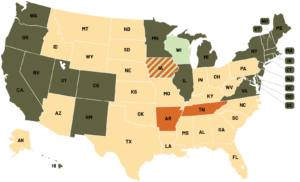
A Broken Bargain: Unchecked Discrimination Against LGBT Workers paints a sobering portrait of widespread discrimination faced by LGBT people in the workplace and documents how LGBT workers continue to face unfair treatment, harassment, and discrimination. Yet they often have nowhere to turn for help. No federal law provides explicit legal protections for LGBT workers, and fewer than half of states have laws that protect workers based on their sexual orientation and gender identity/expression.

Offering the most current data, A Broken Bargain: Unchecked Discrimination Against LGBT Workers details the discrimination faced by LGBT workers, offers solutions for fair treatment at work, and outlines policy recommendations to level the playing field for LGBT workers.
Related resources

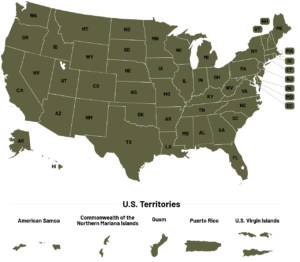
Nondiscrimination Laws
Non-discrimination laws protect LGBTQ people from employment, housing, public accommodations, credit, and other discrimination.
Employment Nondiscrimination
Employment non-discrimination laws protect people from being unfairly fired, not hired, or discriminated against in the workplace by private employers on the basis of gender identity or sexual orientation.
LGBTQ People
LGBTQ people in the United States have families, work hard to earn a living, pay taxes, and serve their communities and their country. MAP offers a collection of resources addressing the many aspects of LGBTQ people’s lives.
Economic Security

LGBTQ people in the United States have the same worries as others when it comes to finding good jobs, providing for their families, and saving for the future. But research consistently finds that LGBTQ people and their families are more likely to struggle economically and experience higher rates of poverty

4 Ways Companies Can Support the LGBTQ Community All Year Long
The LGBTQI+ Economic and Financial (LEAF) Survey
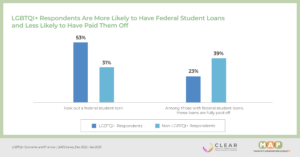
This report by MAP and CLEAR shines new light on the financial experiences and issues faced by LGBTQI+ people in the U.S. and fills in critical gaps left by many federal and financial industry surveys that fail to include LGBTQI+ demographics.
The LGBTQI+ Economic and Financial Survey (LEAF) Infographics

The following infographics are drawn from the report The LGBTQI+ Economic and Financial (LEAF) Survey: Understanding the Financial Lives of LGBTQI+ People in the United States, authored by the Movement Advancement Project (MAP) and the Center for LGBTQ Economic Advancement and Research (CLEAR).

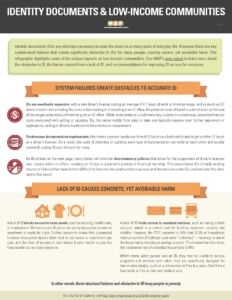
Identity Documents & Low-Income Communities

Infographic that highlights some of the ID obstacles that uniquely impact low-income communities.

LGBTQ-Owned Small Businesses in 2021

Using data from the Federal Reserve Banks’ annual Small Business Credit Survey (SBCS), the Center for LGBTQ Economic Advancement & Research (CLEAR) and the Movement Advancement Project (MAP) have created a first-of-its-kind look at the financial health and needs of LGBTQ-owned small businesses. Key findings include: —LGBTQ businesses were equally

Join our community

Get research updates, stories, and ways to support.