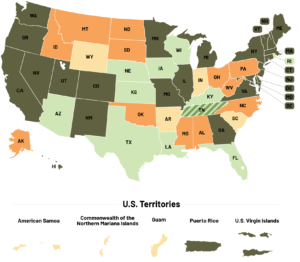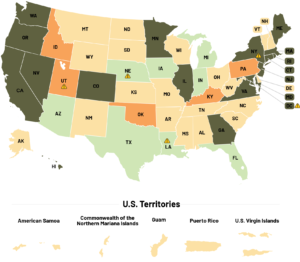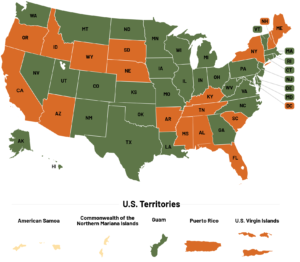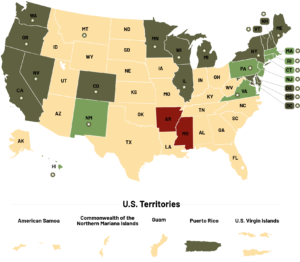

With a rise in hate violence across the country, Policy Spotlight: Hate Crime Laws provides a groundbreaking side-by-side look at the limitations and opportunities of hate crime laws as a means of preventing and addressing hate violence. Released in partnership with 16 leading civil rights organizations, the report includes a foreword by Judy Shepard, on behalf of the Matthew Shepard Foundation, as well as a state-by-state analysis of hate crime laws.
Hate Crime Laws Vary Widely Across the Country
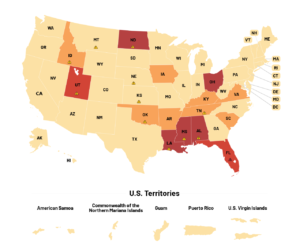
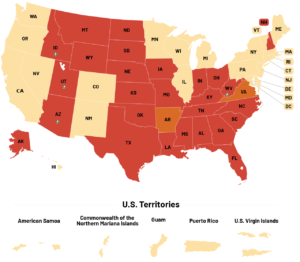
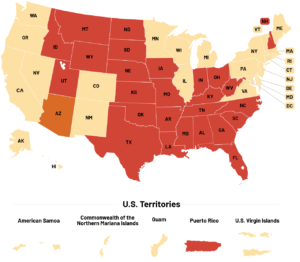
The report finds that federal and state governments vary widely in their responses to hate violence. The report analyzes state hate crime statutes across more than 10 distinct characteristics. The common element across state hate crime laws is the use of criminal punishment, typically through sentencing enhancements.
Challenges of Addressing Hate Violence Through the Criminal Justice System
Addressing hate violence when it happens is imperative. State hate crime laws provide avenues for responding to hate crimes, but they also highlight the challenges inherent in the criminal justice system. These challenges include:
- Failing to address root causes of violence.
- Widespread bias in the criminal justice system. Evidence shows that, for example, even though the majority of hate crimes are committed by white people, many states’ law-enforcement-recorded hate crimes disproportionately list Black people as offenders.
- Flaws in hate crime data collection and reporting are widespread.
- Changing the intent of the law, for example, by attempting to add police officers as a protected class in hate crime laws.
Expanding Solutions to Address Hate Violence
The report highlights opportunities for both improving hate crime laws and better supporting communities affected by hate violence:
- Investing in communities that are harmed by hate violence. Expanding nondiscrimination protections and investing in social safety nets will help reduce the instability caused by discrimination. In turn, this reduces vulnerable communities’ exposure to potential violence.
- Preventing violence through work that not only aims to reduce hate crimes, but also works to reduce hate and violence overall.
- Improving law enforcement accountability and training, including addressing how law enforcement can disproportionately harm vulnerable communities.
- Improving data collection can help connect people impacted by hate crimes to resources and support. More robust data can also support more tailored responses to hate violence, track potential disparities or bias in the enforcement of hate crime laws, and evaluate the efficacy of non-carceral responses to hate crime.
- Shifting focus toward support and healing, such as through expanded measures to support victims and survivors of hate crimes, community education and response strategies, and non-carceral approaches to justice.
As the United States continues to grapple with racial injustice, bias in the criminal justice system, and rising hate violence against too many communities, it is critical that we re-examine our responses to hate crimes. Additional solutions are needed to address hate violence, including a careful review of how hate crimes laws in their current and potential forms fit into the work of building safe communities for everyone.