You are here:

Why We All Need the Equality Act Now

Authors

Movement Advancement Project

Partners

Center for American Progress
Lawyers for Civil Rights
National Center for Transgender Equality
National Partnership for Women & Families
National Women's Law Center

Report Resources

Why We All Need the Equality Act Now
Download PDF
Press Release: New Report Outlines Why the Equality Act is the Civil Rights Update Needed Now for Women, People of Color, and People of Faith, in Addition to LGBTQ People
Read more

Recommended Citation

Movement Advancement Project. January 2021. Why We All Need the Equality Act Now. https://mapresearch.org/report/why-we-all-need-the-equality-act-now/.

In 2021, Congress has the opportunity to recommit our country and our elected officials in securing fairness and equality for all by passing the Equality Act. Why We All Need the Equality Act Now outlines the ways in which the Equality Act is vital legislation not just for LGBTQ people, but also for women, people of color, and immigrants.

The Equality Act would update existing civil rights law by:

  • Filling critical gaps in nondiscrimination protections in public places.
  • Protecting against sex discrimination in public accommodations and federally funded programs.
  • Adding explicit nondiscrimination protections for LGBTQ people.

The report highlights the urgency of adding such protections now—especially given the number of public places in which people of color experience discrimination, such as in retail shops and taxi cabs. The Equality Act builds on the legacy of the Civil Rights Act of 1964 by expanding the public places where discrimination is explicitly prohibited to include retail stores, bars, taxis and ride sharing, small entertainment venues like bowling alleys, and personal services such as barbershops and salons. Expanding where discrimination against people of color, immigrants, people of faith and others is prohibited to more of the places people visit daily is critical.

The report also outlines the ways that the Equality Act would protect against sex discrimination in public places including stopping pharmacies from refusing to fill prescriptions for birth control or preventing dry cleaners from charging women more than men. Additionally, because sexual harassment is a form of sex discrimination, new legal protections in the Equality Act would prevent sexual harassment in restaurants, hotels, and in transportation.

Additionally, the Equality Act will explicitly add “sexual orientation and gender identity” to existing civil rights laws, meaning that LGBTQ people will be expressly protected in key areas of everyday life, including housing, health care, public accommodations, education, and more. Currently, 29 states do not have laws that explicitly protect LGBTQ people from such discrimination.

Authored by the Movement Advancement Project, the report is released in partnership with the Center for American Progress, Lawyers for Civil Rights, National Center for Transgender Equality, National Partnership for Women and Families, and National Women’s Law Center.
Related resources

Anti-bullying
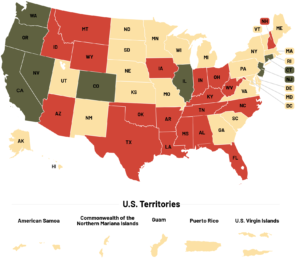
This map shows state anti-bullying laws that explicitly enumerate sexual orientation and/or gender identity as protected characteristics, as well as states that explicitly interpret existing prohibitions against sex discrimination to include discrimination based on sexual orientation or gender identity.
Nondiscrimination Laws
Non-discrimination laws protect LGBTQ people from employment, housing, public accommodations, credit, and other discrimination.
Safe School Laws
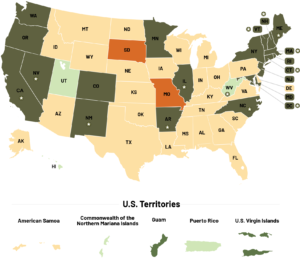
This map shows state school nondiscrimination laws that explicitly enumerate sexual orientation and/or gender identity as protected characteristics, as well as states that explicitly interpret existing prohibitions against sex discrimination to include discrimination based on sexual orientation or gender identity.
LGBTQ Curricular Laws
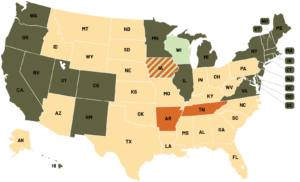
This map summarizes whether states have an LGBTQ-inclusive curricular standards law or any of the following LGBTQ-specific school censorship laws: “Don’t Say LGBTQ” laws, older laws censoring discussions of homosexuality, and parental opt-out/opt-in laws.
LGBTQ-Inclusive Curricular Standards
LGBTQ Women

Women who are LGBTQ have the same concerns as other women. They worry about finding and keeping good jobs, saving for the future, taking care of their children and families, and making ends meet. But America’s 5.1 million LGBTQ women face added challenges and worries not just because of their

LGBTQ People
LGBTQ people in the United States have families, work hard to earn a living, pay taxes, and serve their communities and their country. MAP offers a collection of resources addressing the many aspects of LGBTQ people’s lives.
Education
Every student, from kindergarten to college and beyond, deserves a fair chance to succeed in school and prepare for their future—including students who are LGBTQ. Given the importance of access to education for long-term economic security, the experiences of LGBTQ youth in schools is especially troubling.
Housing

LGBTQ people are our family, friends, neighbors, and coworkers. When it comes to having a safe place to live, they should be treated like anyone else and not be discriminated against. Yet LGBTQ people report high rates of housing discrimination, including being denied a rental unit, charged more, or harassed

Join our community

Get research updates, stories, and ways to support.