You are here:

The LGBTQI+ Economic and Financial (LEAF) Survey

Authors

Movement Advancement Project
Center for LGBTQ Economic Advancement and Research (CLEAR)

Report Resources

Report PDF
Download
Press Release
Read More
Executive Summary
Download
Report Infographics
See More
"4 Ways Companies Can Support the LGBTQ Community All Year Long"
View Brief

Recommended Citation

Center for LGBTQ Economic Advancement and Research and Movement Advancement Project. March 2023. The LGBTQI+ Economic and Financial (LEAF) Survey: Understanding the Financial Lives of LGBTQI+ People in the United States. https://mapresearch.org/report/the-lgbtqi-economic-and-financial-leaf-survey/.

The LGBTQI+ Economic and Financial (LEAF) Survey: Understanding the Financial Lives of LGBTQI+ People in the United States, a report by MAP and the Center for LGBTQ Economic Advancement and Research (CLEAR,) shines new light on the financial experiences and issues faced by LGBTQI+ people in the U.S.

Filling in critical gaps left by many federal and financial industry surveys that fail to include LGBTQI+ demographics, the report analyzes results from a survey of 2,505 LGBTQI+ and 503 non-LGBTQI+ adults, conducted from December 2022 to January 2023. Some key findings include:

  • LGBTQI+ people reported losing the ability to rely financially on their families after coming out. While 73% of LGBTQI+ respondents said they could rely financially on their family before telling them about their sexual orientation, only 62% could do so after coming out.  The gap was even greater for transgender respondents.
  • Four in ten parents (40%) reported having some out-of-pocket legal costs related to family formation. Additionally, 43% of LGBTQI+ parents had spent $1,000+ on out-of-pocket healthcare costs for family formation; nearly a third (32%) had spent $5,000+.
  • Most respondents who received gender-affirming care (82%) reported spending some money out-of-pocket. Nearly half (46%) of people who had received gender-affirming care spent $5,000+ out-of-pocket; one-third (33%) had spent at least $10,000 out-of-pocket.
  • LGBTQI+ people were more likely to report negative feelings about their finances than positive ones. Roughly twice as many LGBTQI+ respondents as non-LGBTQI+ respondents reported feeling anxious, overwhelmed, and depressed about their finances.
  • One in ten LGBTQI+ respondents (11%) said they had experienced discrimination in banking or financial services.
Related resources

Support for Transgender People is Higher Than Headlines Suggest
This partner brief from MAP and Advocates for Trans Equality (A4TE) offers new analysis which shows that transgender people are widely accepted and supported by their families, workplaces, faith communities, and more.
Talking About ID Update Bans hero image
Talking About ID Update Bans
Identification documents are vital keys that open doors to so many parts of everyday life. Learn about conversations that can help conflicted audiences understand what’s at stake when states seek to ban transgender people from updating the gender marker on their ID.
Nondiscrimination Laws
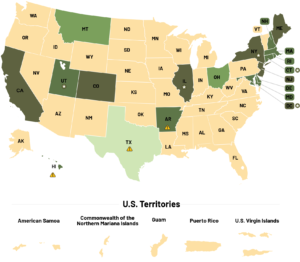
Non-discrimination laws protect LGBTQ people from employment, housing, public accommodations, credit, and other discrimination.
Identity Document Laws and Policies
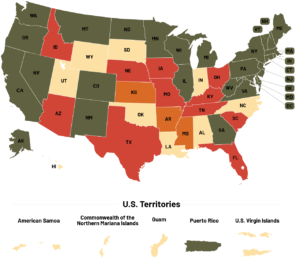
These maps illustrate the state laws and administrative polices governing the processes by which an individual can change the gender marker on their driver's license and/or birth certificate to accurately reflect their gender identity, sometimes including intrusive and outdated requirements, such as proof of sex reassignment surgery and court orders.
Transgender Healthcare “Shield” Laws
Bans on Best Practice Medical Care for Transgender Youth
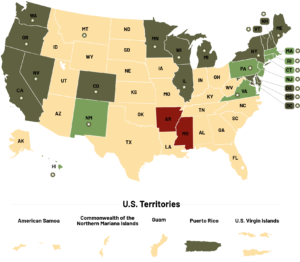
Bans on best-practice medical care represent one of the most extreme and coordinated political attacks on transgender people in recent years. These bills target transgender youth by blocking their access to best-practice medical care.
Medicaid Coverage of Transgender-Related Health Care
Bans on Insurance Exclusions of Transgender-Related Care
Fertility Healthcare Coverage

Join our community

Get research updates, stories, and ways to support.