You are here:

LGBTQ People

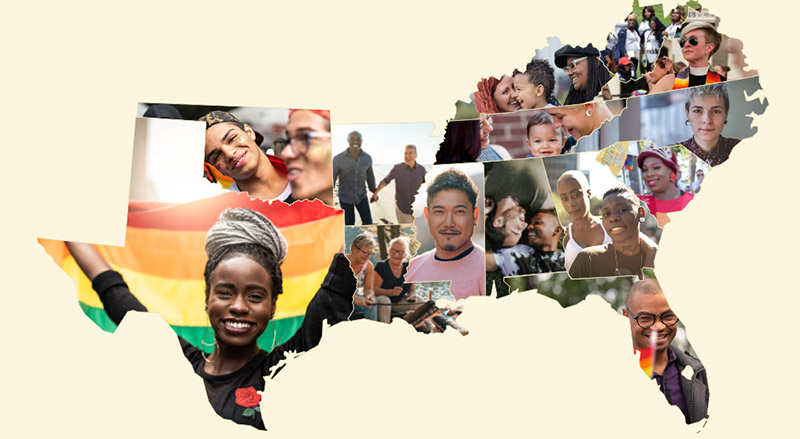
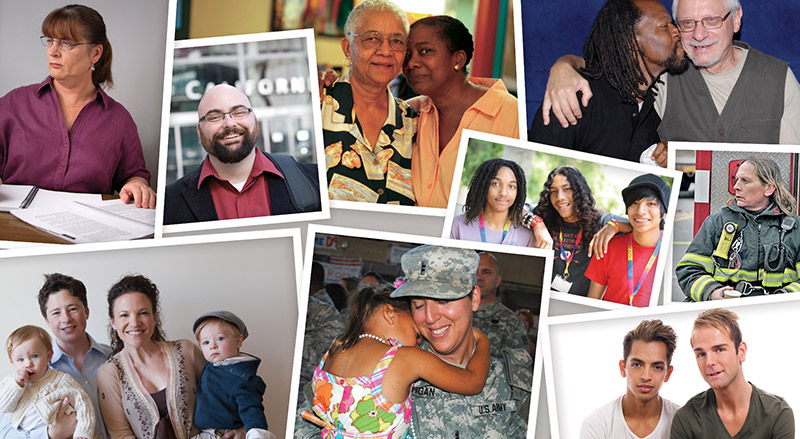
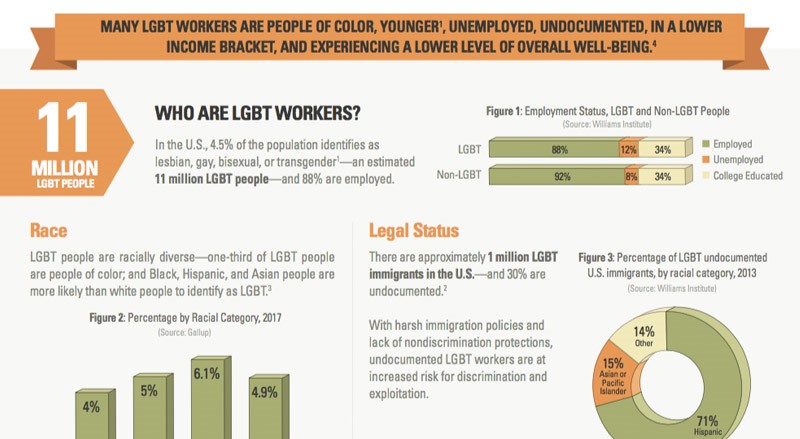
LGBTQ people in the United States have families, work hard to earn a living, pay taxes, and serve their communities and their country. Recent research by Gallup finds that 9.3% of the adults in the United States identify as LGBTQ. Applying these figures to the total number of adults in the U.S., this suggests that there are over 24 million LGBTQ adults nationwide. 

The following is a collection of MAP’s library of resources addressing the many aspects of LGBTQ people’s lives. For more tailored results, please use the search function or select an issue or population from the Policy & Issue Analysis menu.

Related Resources

In This Moment, It’s Crucial That States Protect LGBTQ+ Data
As federal data collection on LGBTQ+ people is scaled back, states and localities are increasingly being called on to fill widening gaps in research and data on LGBTQ+ communities.
State-Level Sexual Orientation and Gender Identity Data Practices: Inclusive Data, Responsible Governance
This report maps the landscape of state-level SOGI data collection, assesses emerging risks of data misuse, and identifies policies and practices for leaders committed to ethical, responsible data governance.
Advancing Responsible State-Level SOGI Data Practices

Collection of data on sexual orientation and gender identity (SOGI) by government entities can be a powerful tool to understand the experiences, needs, and disparities affecting LGBTQ+ populations, informing evidence-based policymaking, strengthening program accountability, and supporting civil rights enforcement. As federal efforts to collect LGBTQ-inclusive data are scaled back, state

Support for Transgender People is Higher Than Headlines Suggest
This partner brief from MAP and Advocates for Trans Equality (A4TE) offers new analysis which shows that transgender people are widely accepted and supported by their families, workplaces, faith communities, and more.
Equality Maps Updates hero
LGBTQ Equality Maps Updates: May 2026
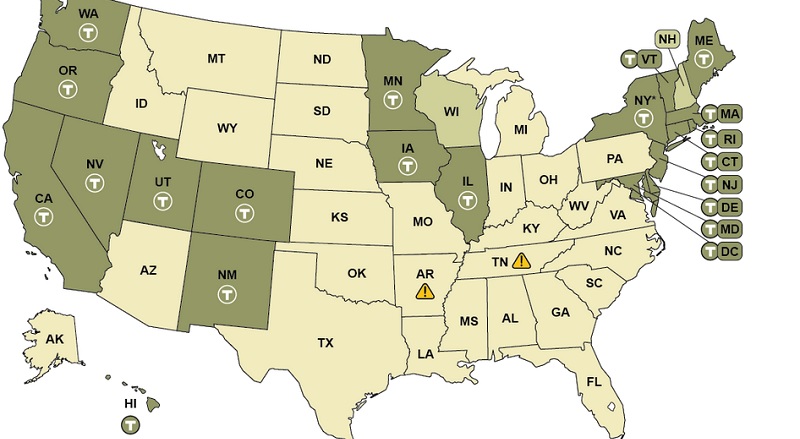
In this rapidly changing landscape, MAP’s LGBTQ Equality Maps provide a detailed snapshot of the current state of LGBTQ laws and policies in the United States. See below for a listing of state level policy changes and MAP’s bill tracking updates as of May 26, 2026.
Mapping Equality
This collection of LGBTQ-related resources includes periodic updates of state level policy changes and bill tracking, comprehensive retrospectives, legislative wrap-ups and forecasts.
Talking About ID Update Bans hero image
Talking About ID Update Bans
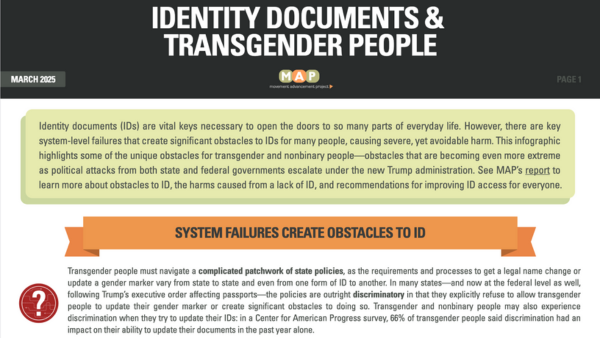
Identification documents are vital keys that open doors to so many parts of everyday life. Learn about conversations that can help conflicted audiences understand what’s at stake when states seek to ban transgender people from updating the gender marker on their ID.
Equality Maps Updates hero
LGBTQ Equality Maps Updates: April 2026
This snapshot details the current state of LGBTQ laws and policies in the United States as of April 2, 2026.
Map image of Positive Laws captured on July 13, 2026
Marriage & Relationship Recognition
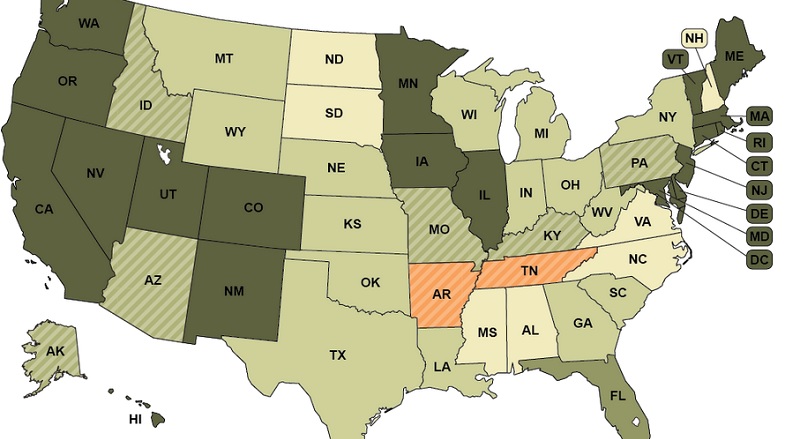
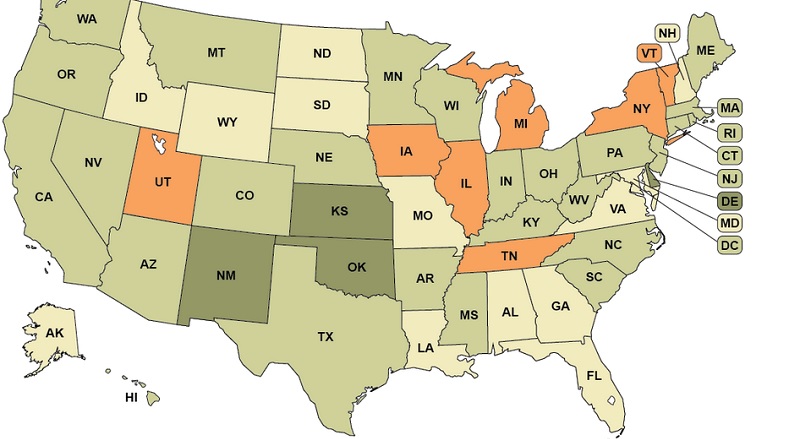
States with the freedom to marry do not ban same-sex couples from entering into legal marriages. However, most states still have constitutional amendments, statutes, or both banning marriage for same-sex couples, even after the 2015 Supreme Court case Obergefell extended marriage equality nationwide.
Map image of Family Leave: Spouse/Partner captured on July 13, 2026
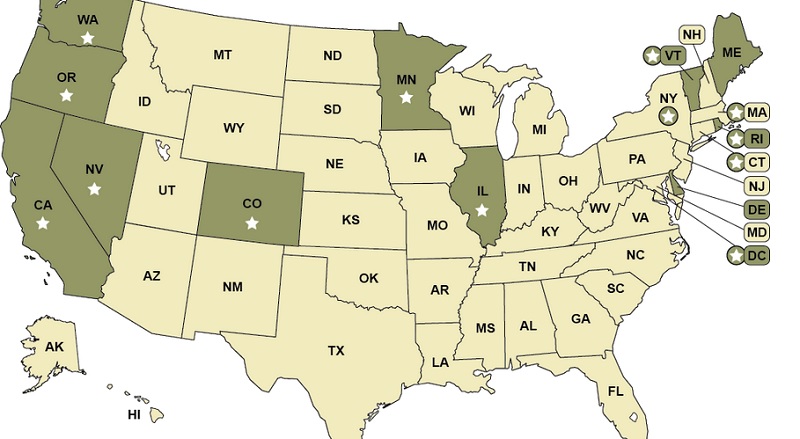
Family Leave Laws
This map depicts state family leave laws covering same-sex couples, which govern whether an LGBT person can take leave from work to care for their same-sex spouse or partner.
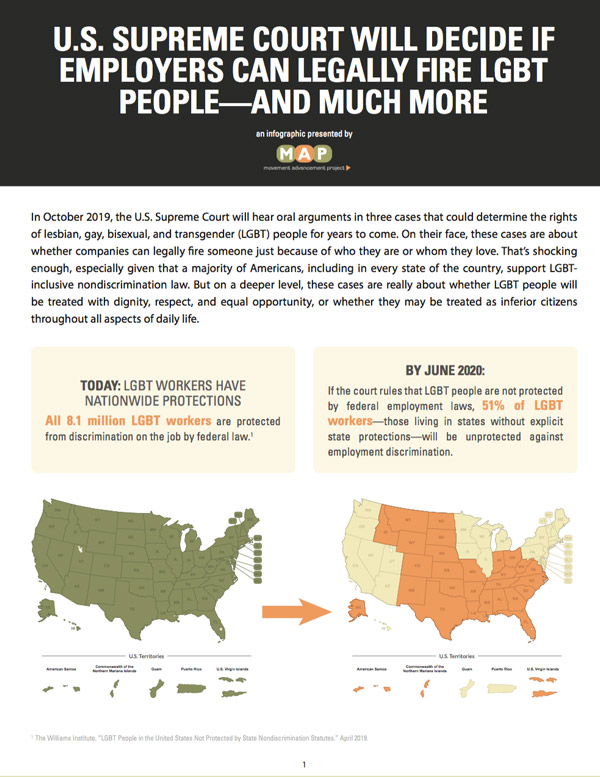
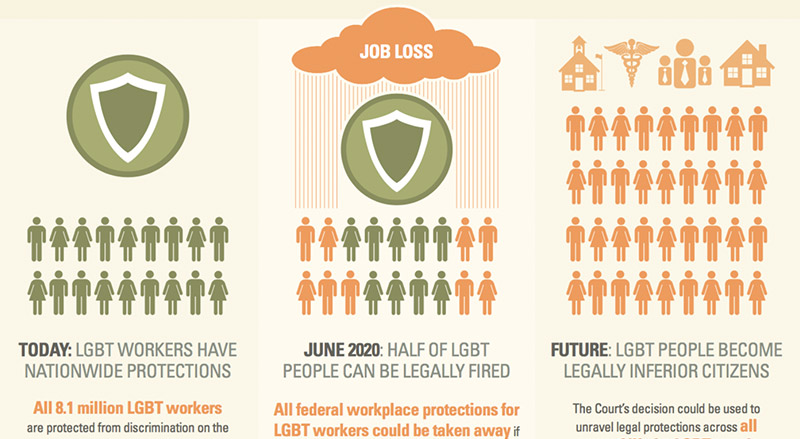
Employment Nondiscrimination
Employment non-discrimination laws protect people from being unfairly fired, not hired, or discriminated against in the workplace by private employers on the basis of gender identity or sexual orientation.
Local Nondiscrimination Ordinances
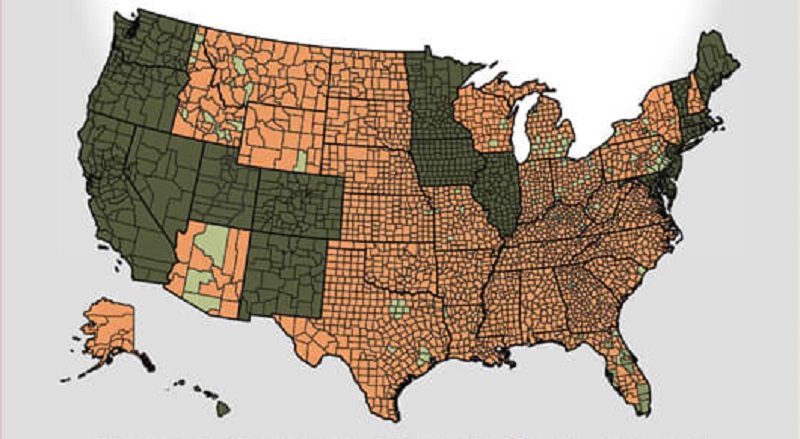
Local employment non-discrimination ordinances protect people from being unfairly fired, not hired, or discriminated against in the workplace by private employers on the basis of gender identity or sexual orientation.
Safe School Laws
This map shows state school nondiscrimination laws that explicitly enumerate sexual orientation and/or gender identity as protected characteristics, as well as states that explicitly interpret existing prohibitions against sex discrimination to include discrimination based on sexual orientation or gender identity.
Anti-bullying
This map shows state anti-bullying laws that explicitly enumerate sexual orientation and/or gender identity as protected characteristics, as well as states that explicitly interpret existing prohibitions against sex discrimination to include discrimination based on sexual orientation or gender identity.
Regulating Gender To Allow Discrimination
These newly emerging laws explicitly regulate gender by defining "sex" throughout all state law to effectively allow discrimination against transgender people.
Map image of Bathroom & Facilities Bans captured on July 13, 2026
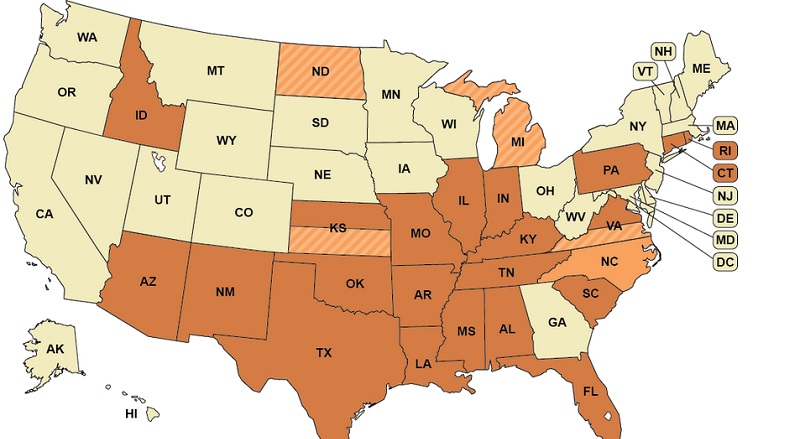
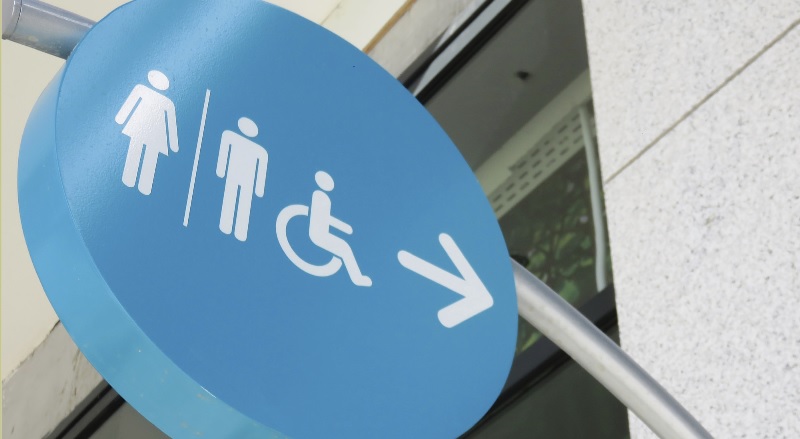
Bans on Transgender People Using Public Bathrooms and Facilities According to their Gender Identity
These laws prohibit transgender people from using bathrooms and facilities—such as locker rooms, shower rooms, changing rooms, and other sex-segregated spaces—according to their gender identity in certain circumstances or places.
Transgender Healthcare “Shield” Laws
These “shield” or “refuge” laws can vary from one state to the next, but their primary goal is to protect transgender people, their families, and their medical providers against these ongoing attacks and to protect access to transgender-related health care.
Parental Recognition Laws
Legal recognition of the parent-child relationship ("parentage") is important for many reasons, from healthcare decisions and school settings to economic security, everyday life, and much more. These maps illustrate some of the pathways to parental recognition that are especially important for LGBTQ families.
Map image of Foster Care captured on July 13, 2026
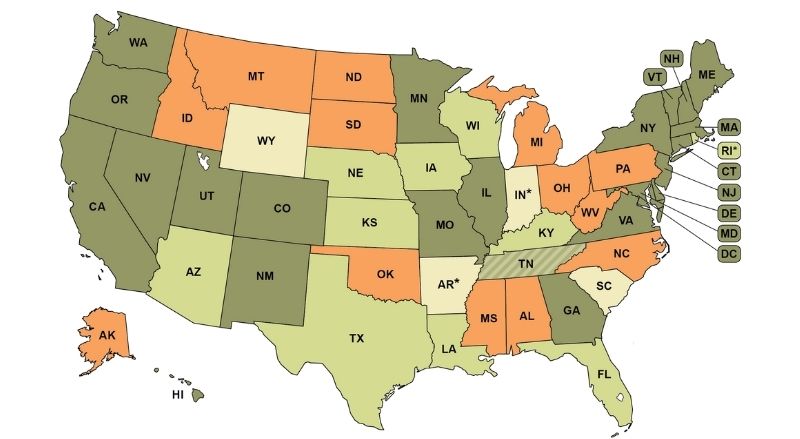
Child Welfare Nondiscrimination Laws
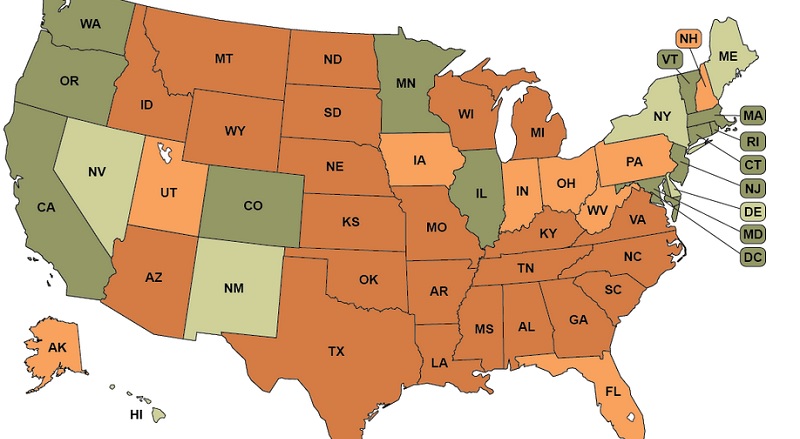
This map depicts child welfare nondiscrimination laws, which protect youth in the child welfare system from discrimination based on the youth's sexual orientation and gender identity.
Map image of Driver’s License captured on July 13, 2026
Identity Document Laws and Policies
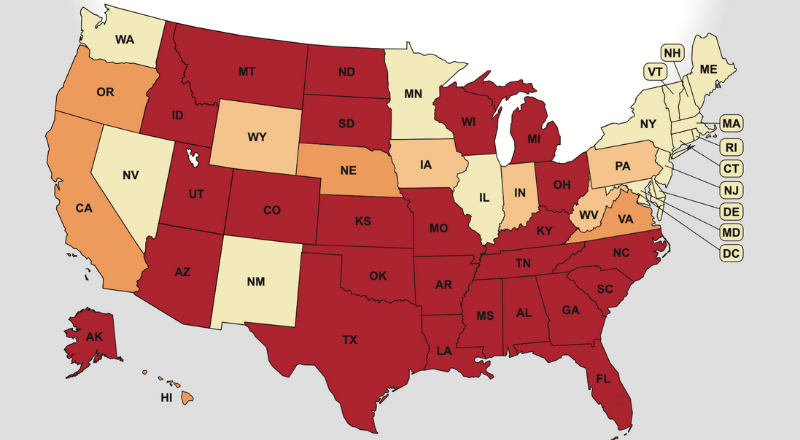
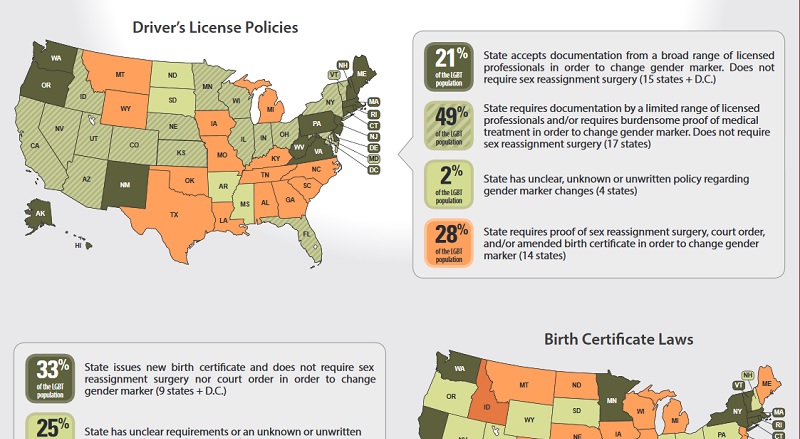
These maps illustrate the state laws and administrative polices governing the processes by which an individual can change the gender marker on their driver's license and/or birth certificate to accurately reflect their gender identity, sometimes including intrusive and outdated requirements, such as proof of sex reassignment surgery and court orders.
Religious Exemptions
State religious exemption laws permit people, churches, non-profit organizations, and sometimes corporations to seek exemptions from state laws that burden their religious beliefs. These laws have recently been used as a defense when businesses discriminate against or refuse service to LGBTQ customers and same-sex couples.
Map image of Housing Nondiscrimination captured on July 14, 2026
Nondiscrimination Laws
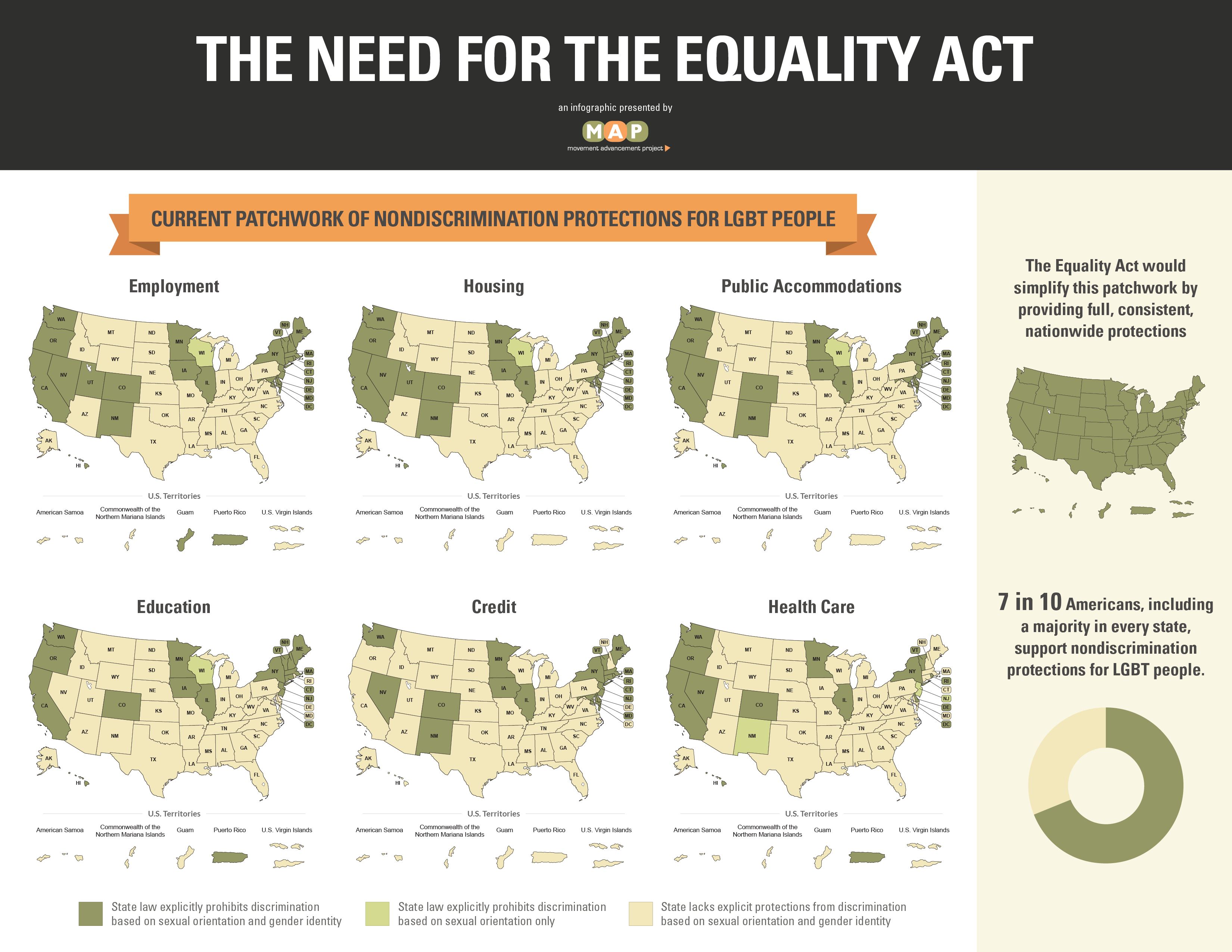
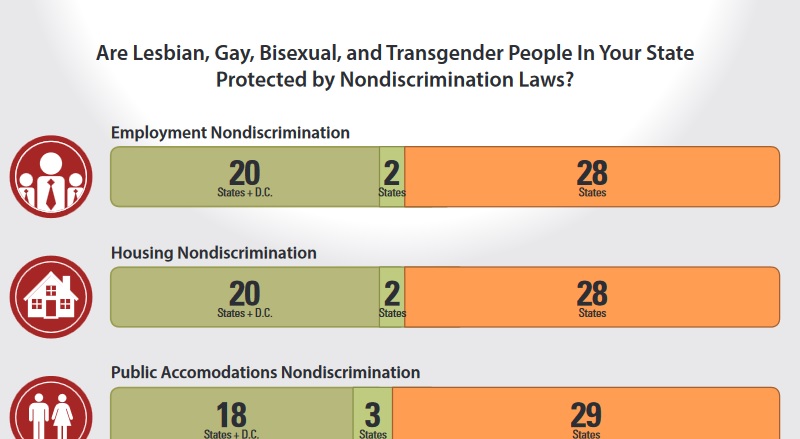
These maps depict nondiscrimination laws, which protect LGBTQ people from employment, housing, public accommodations, credit, and other discrimination.
Restrictions on Drag Performances
This map show what states explicitly restrict drag performances in addition to those with laws about “adult” performances that could potentially be used to target drag performers.
Map image of Forced Outing captured on July 13, 2026
Forced Outing of Transgender Youth in Schools
This map tracks a growing number of states with laws that explicitly require school staff—and in some cases, any government or public employee—to out transgender youth to their families.
Map image of Sports Participation Bans captured on July 13, 2026
Bans on Transgender Youth Participation in Sports
Laws banning transgender youth from participating in school sports vary in scope across age ranges, but commonly including both K-12 schools and college settings.
LGBTQ Curricular Laws
This map summarizes whether states have an LGBTQ-inclusive curricular standards law or any of the following LGBTQ-specific school censorship laws: “Don’t Say LGBTQ” laws, older laws censoring discussions of homosexuality, and parental opt-out/opt-in laws.
Map image of Youth Care Bans Only captured on July 13, 2026
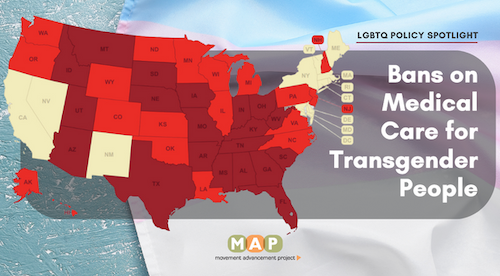
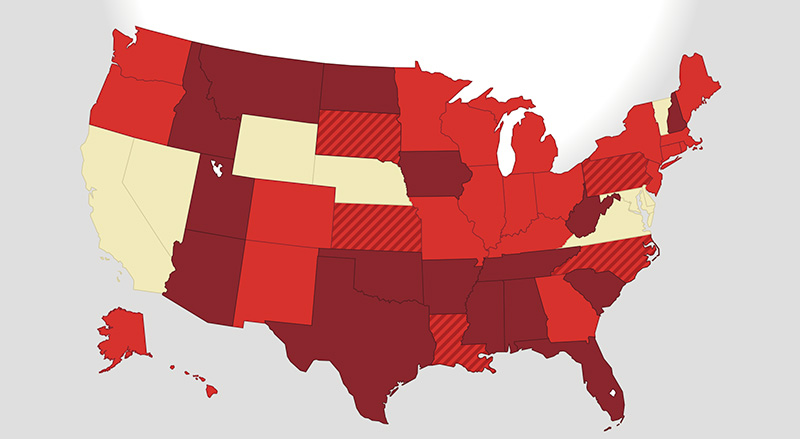
Bans on Best Practice Medical Care for Transgender Youth
Bans on best-practice medical care represent one of the most extreme and coordinated political attacks on transgender people in recent years. These laws target transgender youth by blocking their access to best-practice medical care.
Map image of Medicaid captured on July 13, 2026
Medicaid Coverage of Transgender-Related Health Care
This map shows state policies regarding Medicaid coverage of medically necessary health care for transgender people. Some state policies explicitly include coverage of such care, while other explicitly exclude it.
Targeted: Marriage Solemnization by Public Officials
Targeted exemptions provide a blanket exemption, or license to discriminate, to anyone operating in a specific area, such as the provision of marriage-related services. This map shows two types of targeted, marriage-related exemptions.
Targeted: Private Wedding Services
Targeted exemptions provide a blanket exemption, or license to discriminate, to anyone operating in a specific area, such as the provision of marriage-related services. This map shows two types of targeted, marriage-related exemptions.
Hate Crime Laws
Hate crime laws create additional or enhanced penalties for crimes committed with bias toward particular characteristics, such as race, religion, disability, sexual orientation, or gender identity. As shown on separate maps, some state laws also require data collection about hate crimes and training for law enforcement about hate crimes.
Jury Service Nondiscrimination
In 2018, the American Bar Association formally urged governments at all levels to explicitly prohibit discrimination against jurors based on sexual orientation and gender identity. This map shows the status of jury nondiscrimination protections across the country.
State Employee Health Benefits
This map reflects state laws or administrative policies which explicitly include, explicitly exclude, or have no clear policy covering transition-related or gender-affirming care for transgender people who are state employees as part of their state employee health benefits.
Targeted: Child Welfare Services
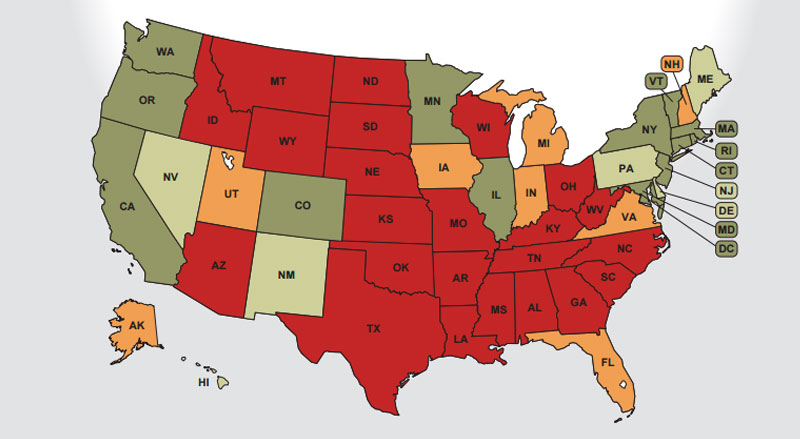
This map shows targeted exemptions for child welfare service providers, which permit child-placing agencies to refuse to place and provide services to children and families, including LGBTQ people and others, if doing so conflicts with their religious beliefs.
Targeted: Medical Professionals
This map shows targeted exemptions for medical providers, which permit medical providers to refuse to serve LGBTQ people and others, if doing so conflicts with the provider’s (or provider’s employer’s) religious beliefs.
LGBT Populations: LGBT People Raising Children
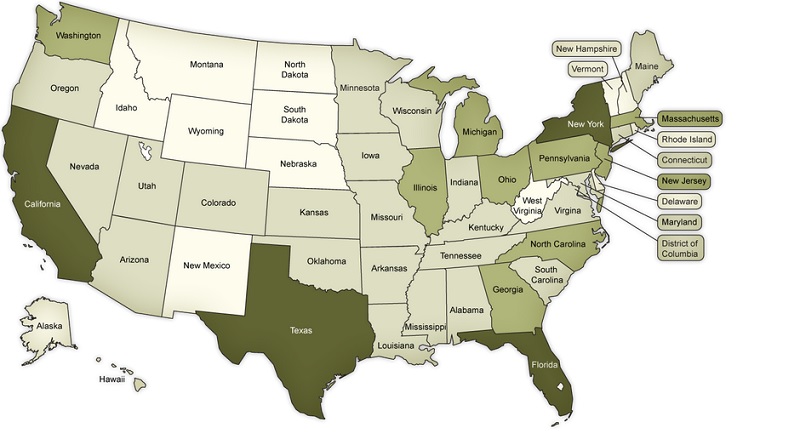
This map shows the percent of LGBT people (ages 25 and over) raising children in each state, based on data collected by Gallup and analyzed by the The Williams Institute.
Gay/Trans Panic Defense Bans
This map depicts states that prohibit so-called “gay and trans panic” defenses, which are based in irrational fears and prejudice toward LGBTQ people, and they imply that violence against LGBTQ people is acceptable or understandable under certain conditions.
Hate Crime Laws: Data Collection
This map shows both what states require hate crimes data collection, and of those states, which specifically require data collection about hate crimes based on sexual orientation and gender identity.
Hate Crime Laws: Law Enforcement Training
This map shows both what states require law enforcement training about hate crimes, and of those states, which specifically require law enforcement training about hate crimes based on sexual orientation and gender identity.
Bans on Insurance Exclusions of Transgender-Related Care
This map reflects laws and policies that bar health insurers from explicitly refusing to cover transgender-related health care benefits and those that explicitly permit insurers to refuse to cover gender-affirming care.
Data Collection
These maps detail states that include questions about sexual orientation and gender identity in the Behavioral Risk Factor Surveillance System (BRFSS) and the Youth Risk Behavior Surveillance System (YRBSS) surveys, respectively.
Conversion “Therapy” Laws
This map illustrates the landscape of laws that prohibit licensed mental health practitioners from subjecting LGBTQ minors to harmful conversion “therapy” practices that attempt to change their sexual orientation or gender identity.
Healthcare Laws and Policies
These maps show states with laws that prohibit or permit coverage for medically-necessary health care for transgender people among health insurers and state employee benefit providers.
LGBT Populations
This map shows the estimated raw number of LGBT people (ages 13+) living in each state. These data are based on a series of studies by UCLA’s The Williams Institute.
Map image of HIV Criminalization Laws captured on July 2, 2026
HIV Criminalization Laws
HIV criminalization laws criminalize the transmission of, or perceived exposure to, HIV and other infectious diseases. The laws create a strong disincentive for being tested for HIV, and result in adverse public health outcomes.
Private Insurance Nondiscrimination Laws
This map reflects laws and policies that bar health insurers from explicitly refusing to cover transgender-related health care benefits and those that explicitly permit insurers to refuse to cover gender-affirming care.
Map image of Fertility Health Care Coverage captured on July 2, 2026
Fertility Health Care Coverage
These maps track current laws regarding state-mandated coverage of fertility treatment and fertility preservation by both private insurers and state Medicaid programs.
Map image of Equality Snapshot: Overall Policy Score captured on July 13, 2026
Equality Snapshot: Overall Policy Score
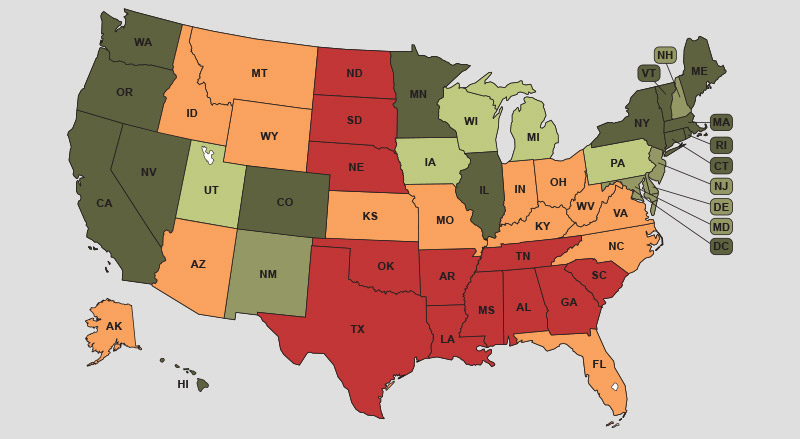
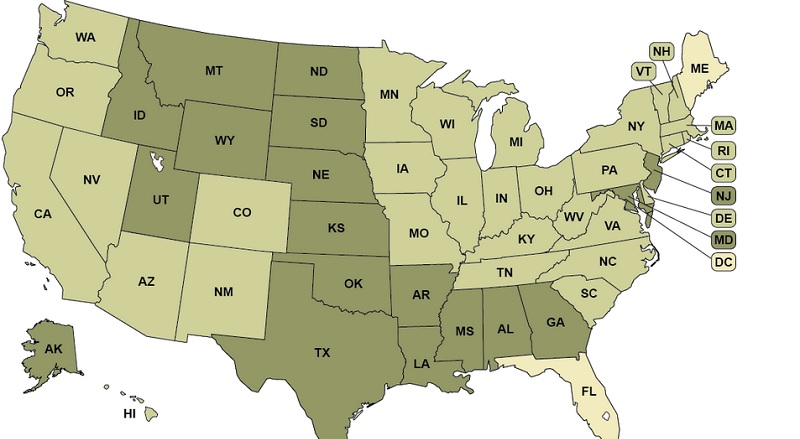
This map shows the overall policy scores (as distinct from sexual orientation or gender identity scores) for each state, the District of Columbia, and the five populated U.S. territories. A state’s policy score accounts for more than 50 laws and policies within each state that impact the lives of LGBTQ
Load More

Join Our Community

Get research updates, stories, and ways to support.