Overview
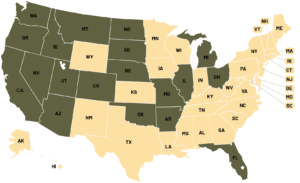
As state legislatures across the country become more polarized, citizens are increasingly turning to direct democracy to protect fundamental rights and advance popular policies that elected officials refuse to address. But the success of recent initiatives, especially around issues like reproductive rights, has prompted a strong backlash from some state legislatures opposed to those efforts. Several states have recently passed new restrictions that make it harder for citizens to utilize direct democracy, in addition to trying to undo measures that voters have already approved.
This report examines how direct democracy works across the states and the ways in which state legislatures are trying to restrict these processes. Efforts to limit access to direct democracy raise serious concerns; by making it more difficult for citizens to exercise rights guaranteed in state constitutions, public trust is undermined and our democratic institutions are weakened.
Important Note — any discussion of the citizen initiative process and its impacts must grapple with an underlying tension: while initiatives have often served as a vehicle for the expansion of rights, they have also been used to restrict the rights of minority groups. Perhaps the most prominent example of this dynamic was the wave of bans on marriage and relationship recognition for same-sex couples that appeared on state ballots in the early 2000s. The initiative process has also been used to pass strict voter ID policies, anti-immigrant policies, and other restrictive measures. While some of these trends eventually shifted along with public opinion, it is important to acknowledge the question of whether such fundamental rights should be beyond the reach of a simple majority vote.